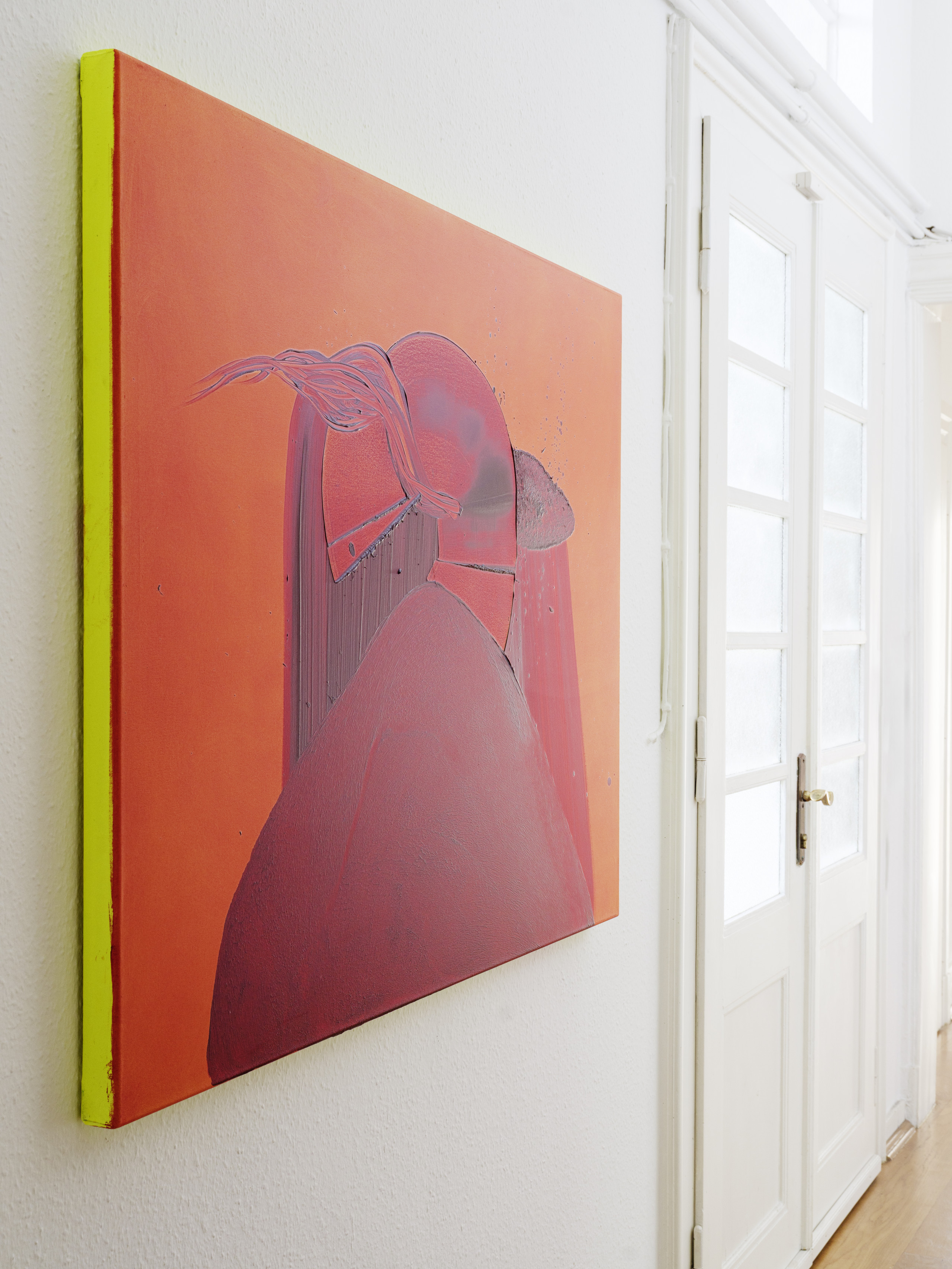
DANIEL LERGON - rupture
Rupture names a hinge in Daniel Lergon’s practice: a shift from staging retroreflection as an optical event to treating retroreflective pigment as a sober grey value folded into a layered, temporal painting system. What first appeared in earlier silver retroreflective paintings as emphatic flashes now becomes a chromatic register that complicates perception rather than soliciting it. The exhibition traces a genealogy—presenting older works alongside new pieces—and extends the previous “Lichtung” series by blending retroreflective material with singlepigment passages on earth and white grounds, increasing complexity while demoting spectacle.
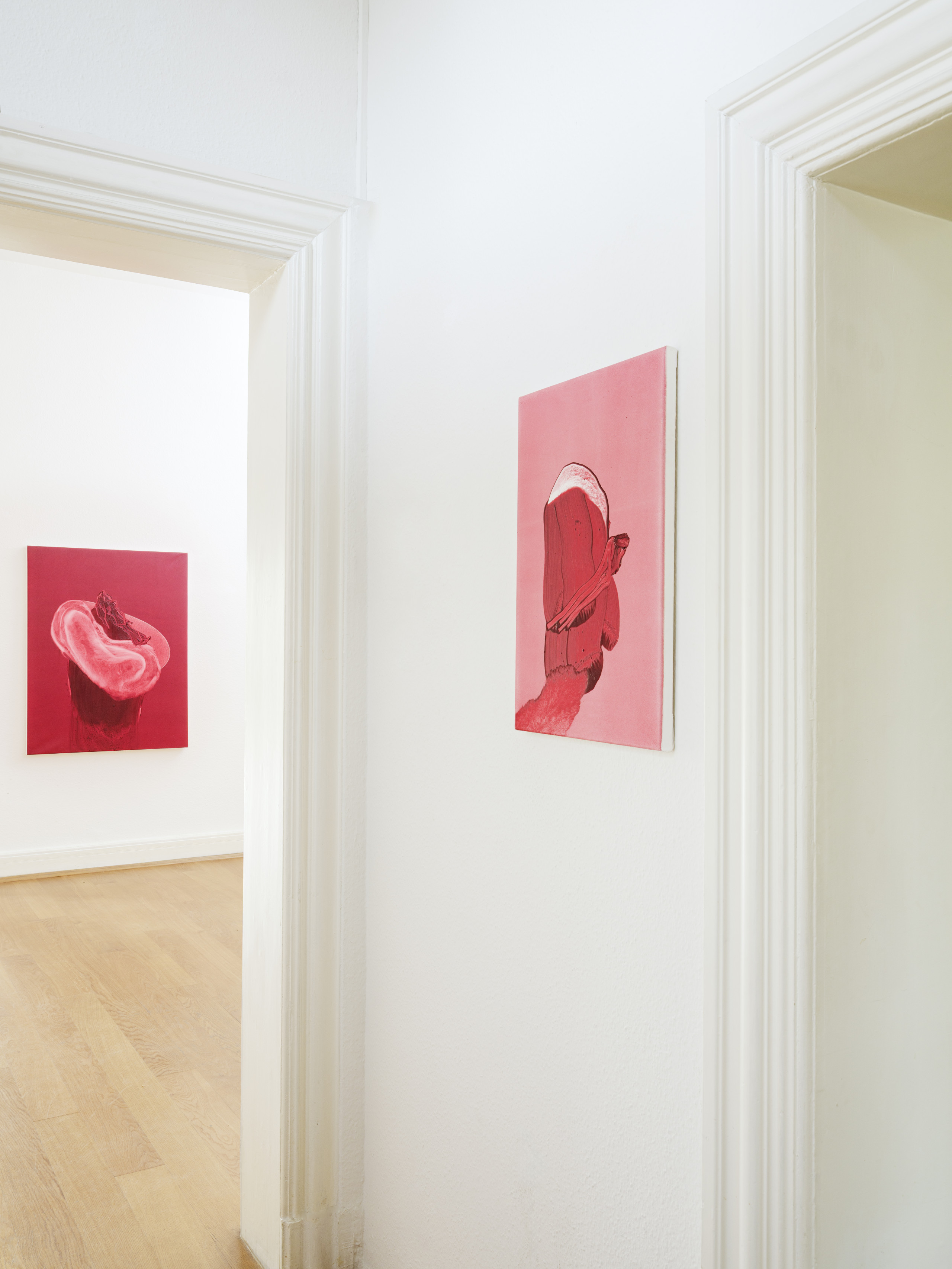
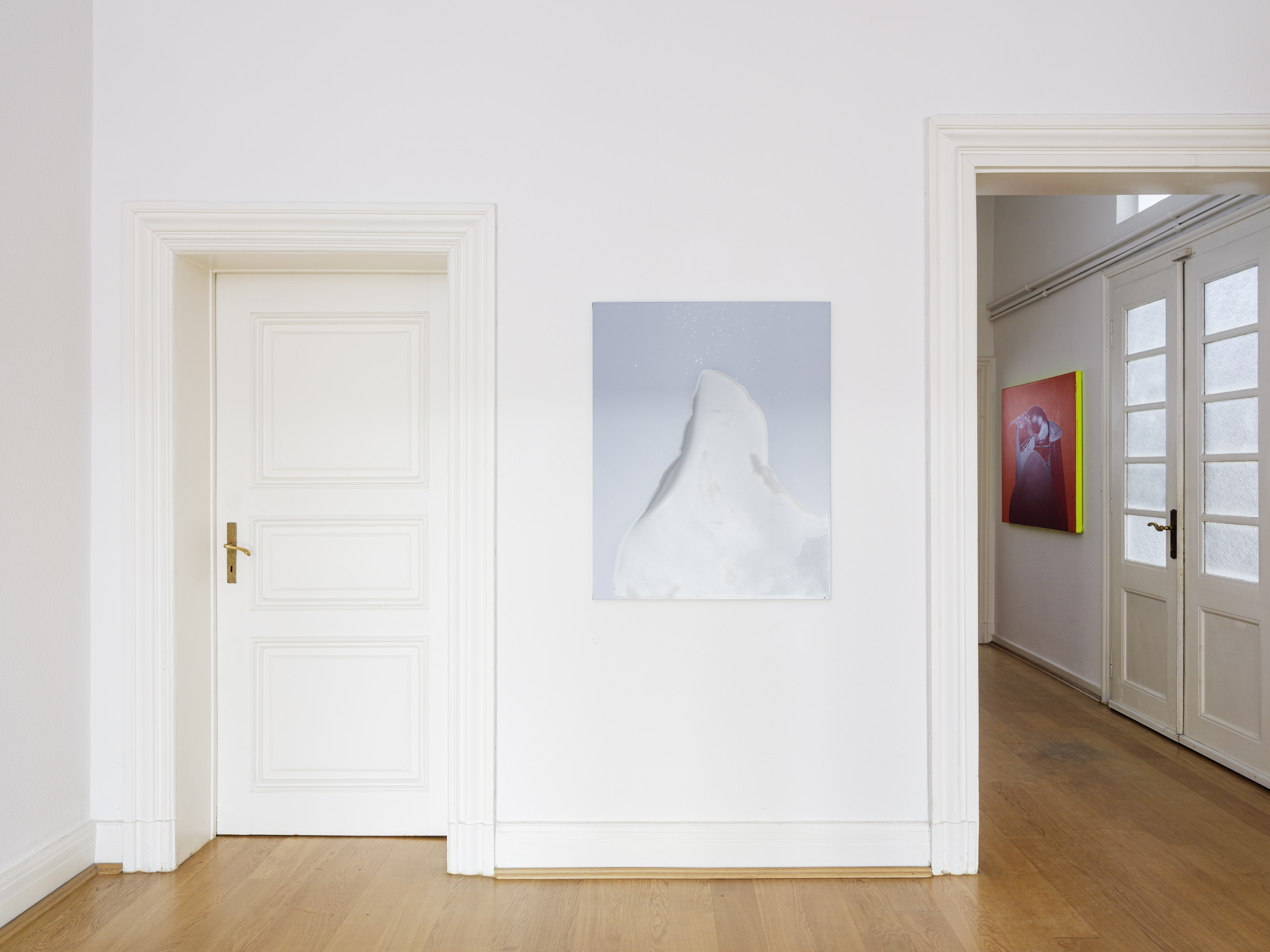
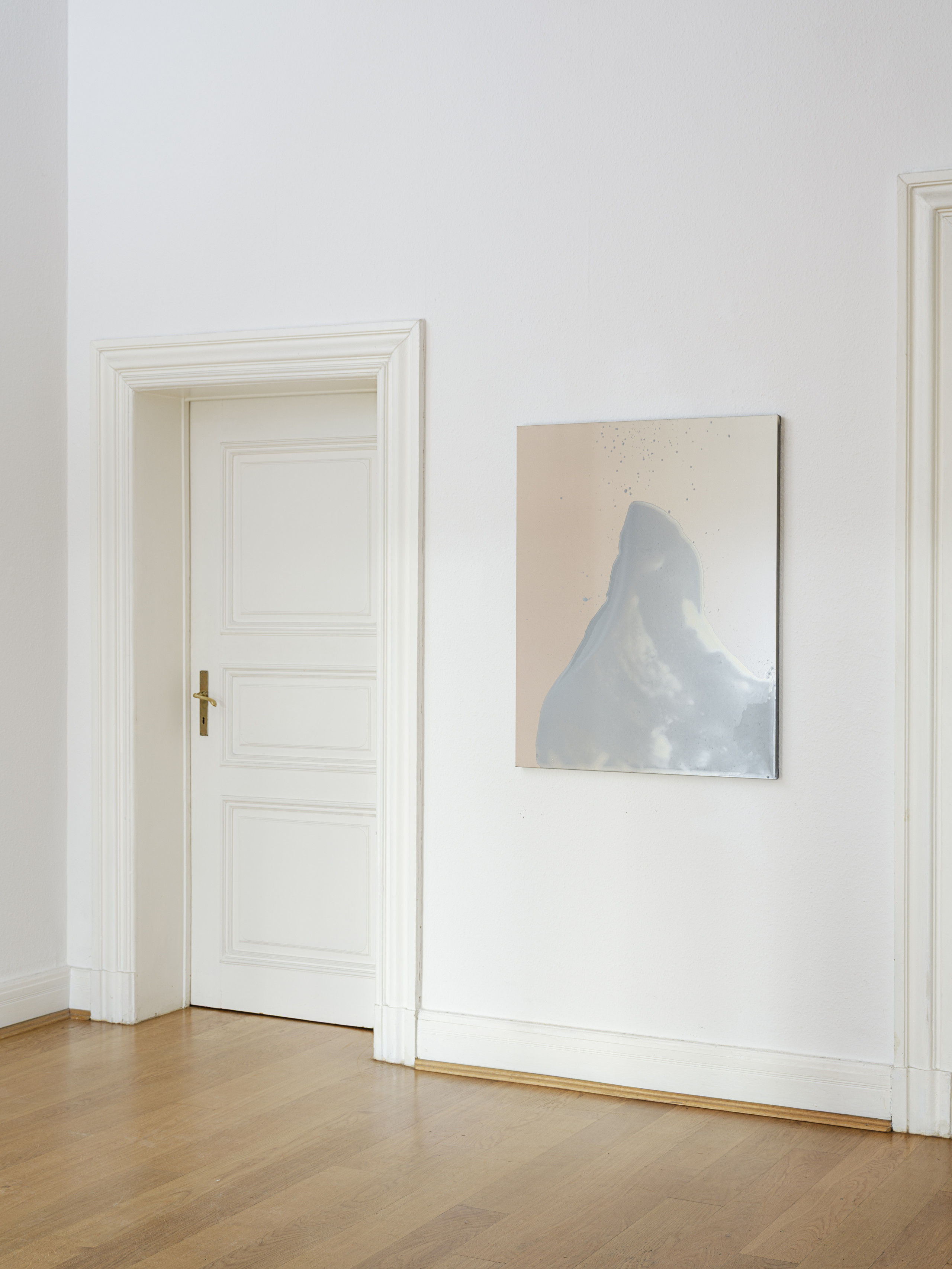
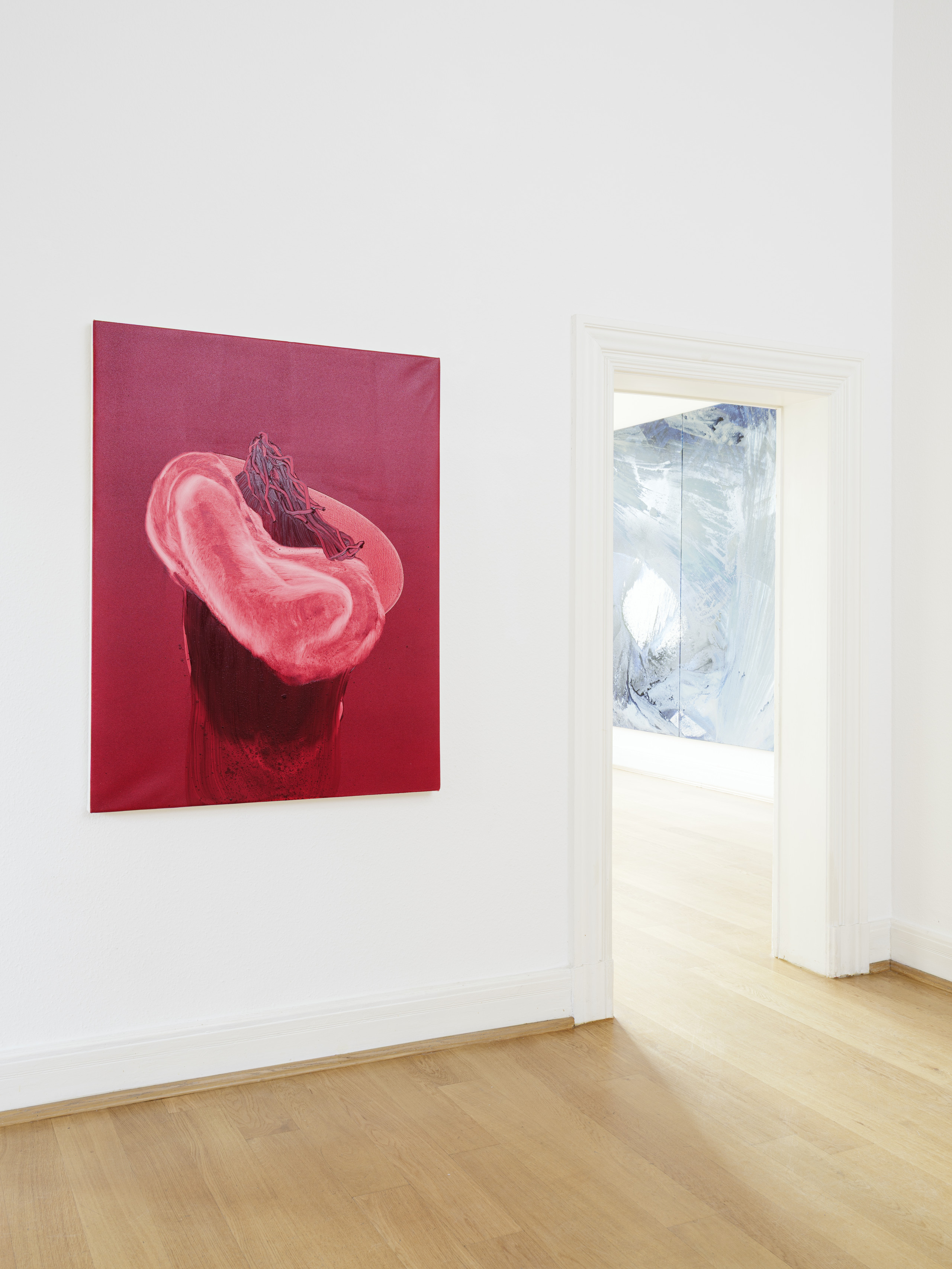
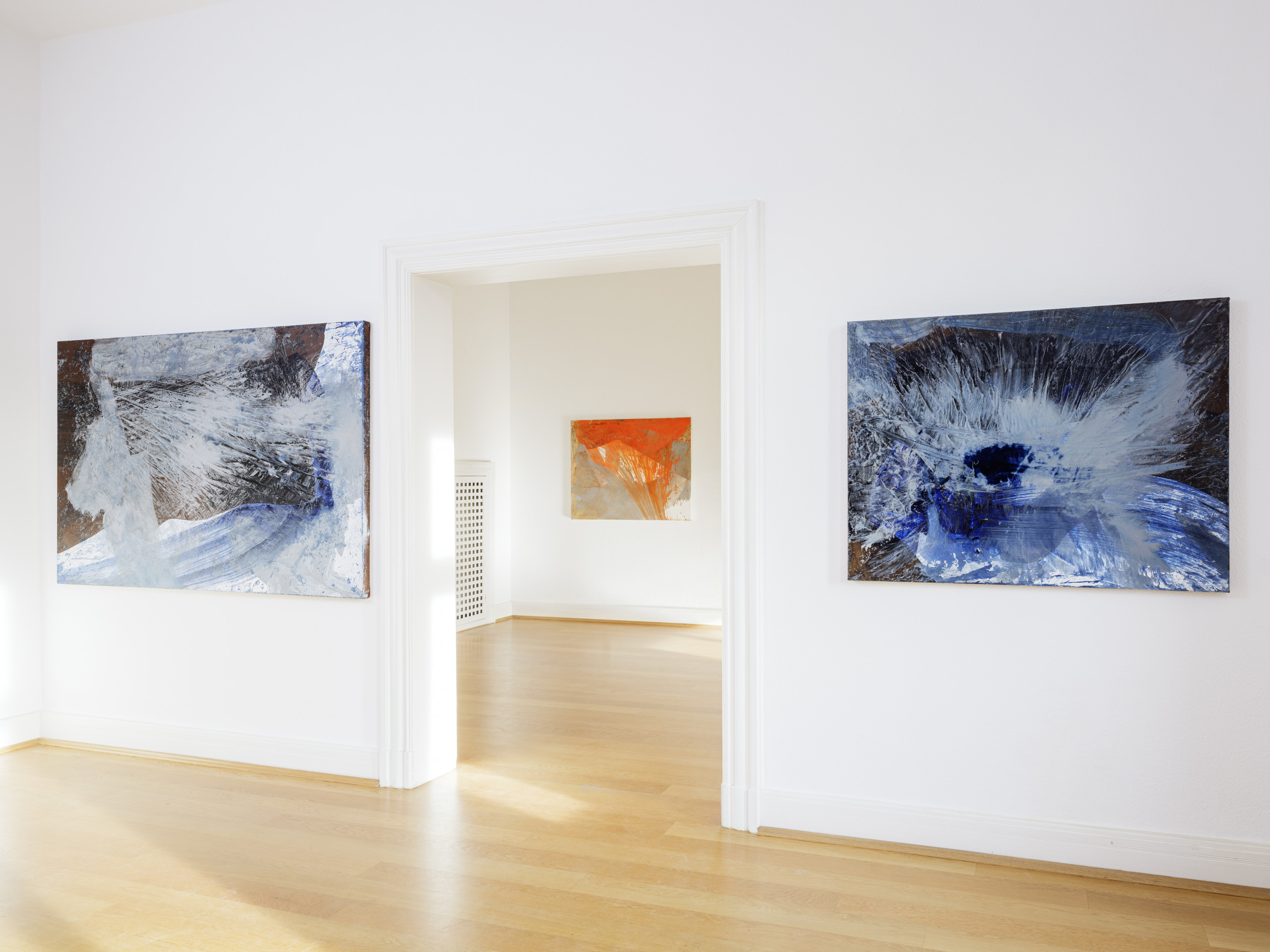
The entrance, comparatively dim, serves as a prelude. An older silver retroreflective painting hangs with an earlier alizarin crimson work without retroreflective pigment and a new red–grey hybrid. Together they stage a methodological arc: pure reflective grey; saturated chroma on luminous ground; and a hybrid in which metallic greys and crimson interpenetrate. In low light the trio reads as restrained greys and muted reds; movement and incidental illumination later disclose latent luminosity. Here rupture is conceptual, between an era of effect and a present insistence on first reading the works as grey paintings.
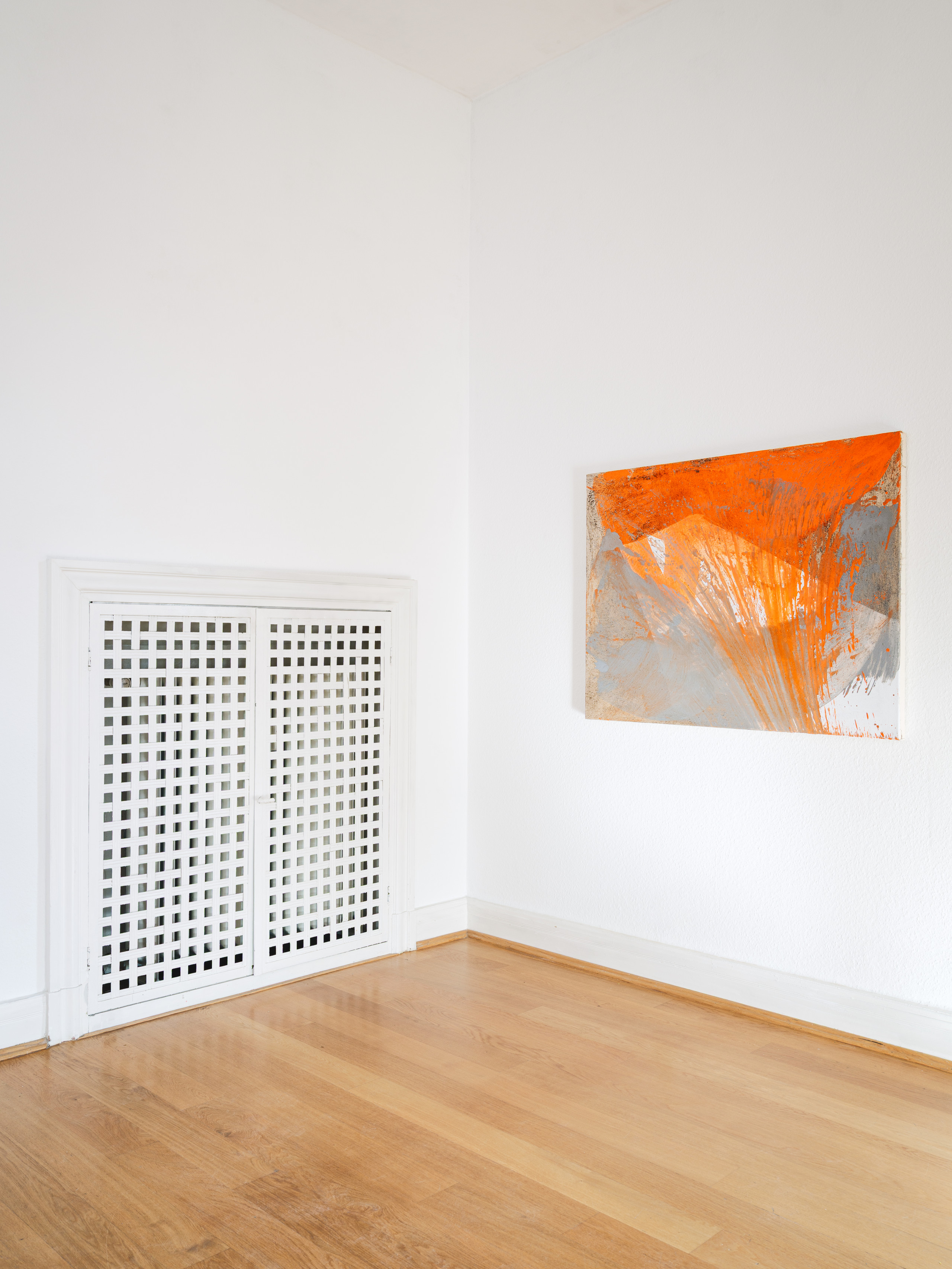
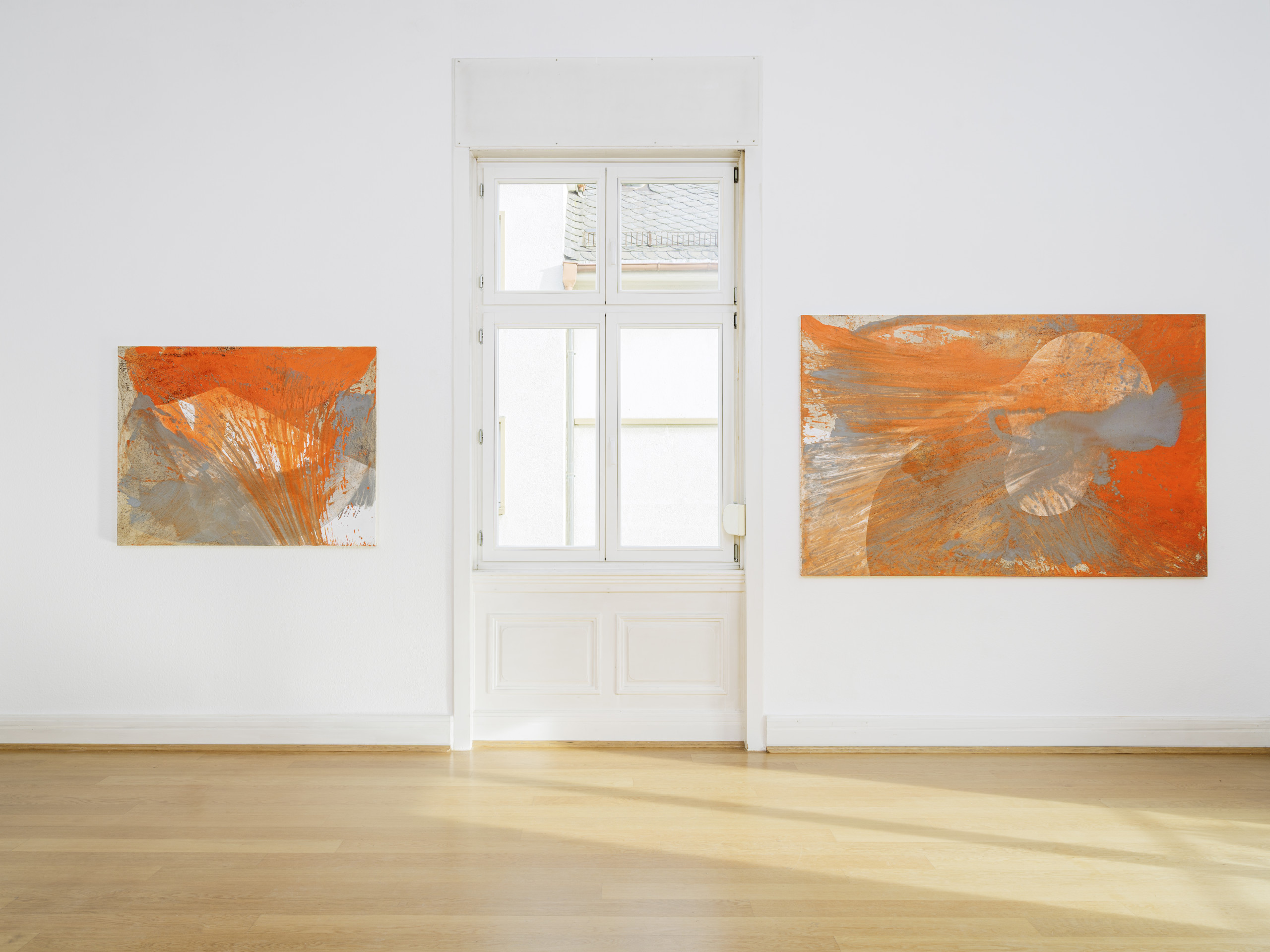
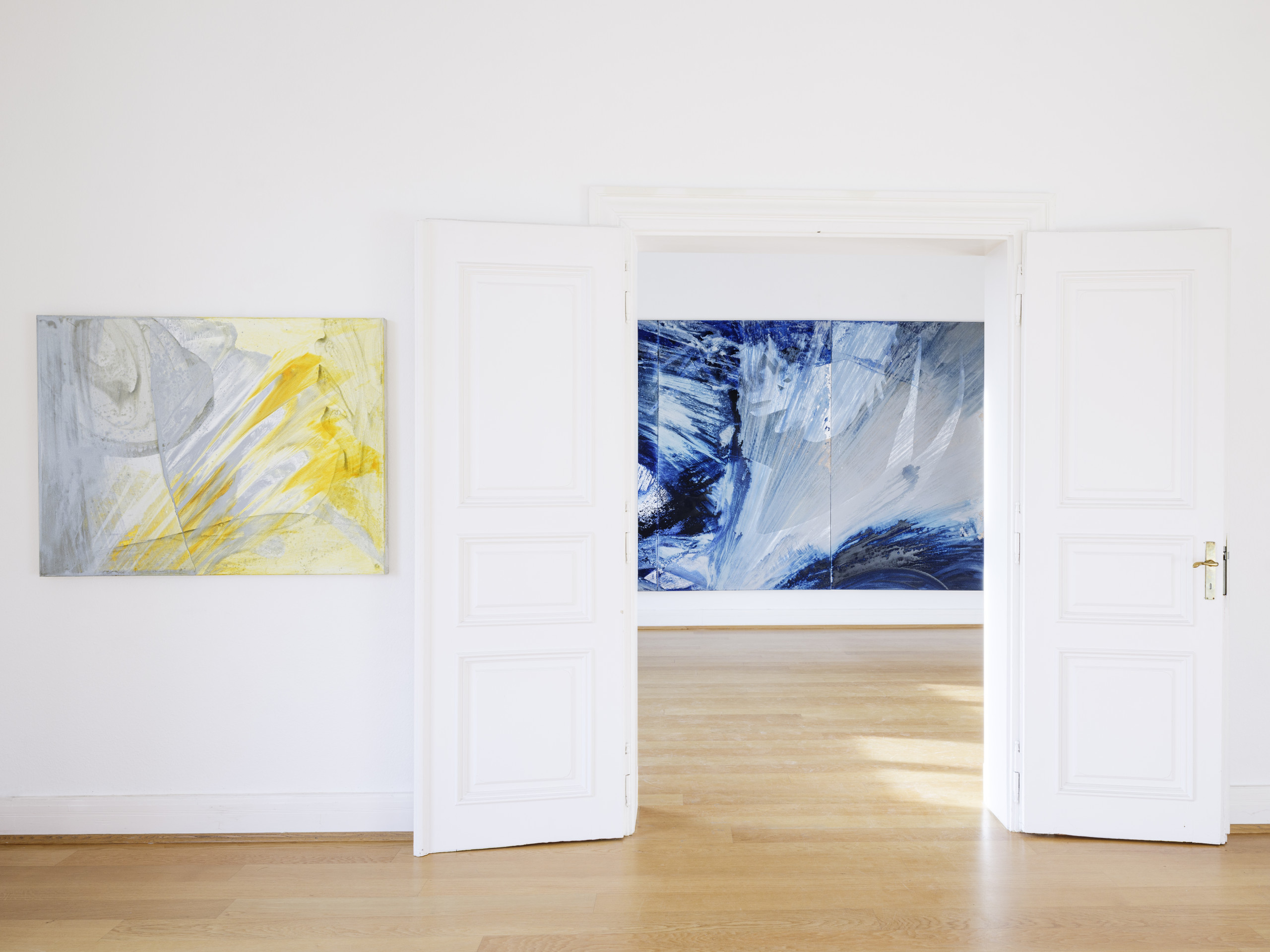
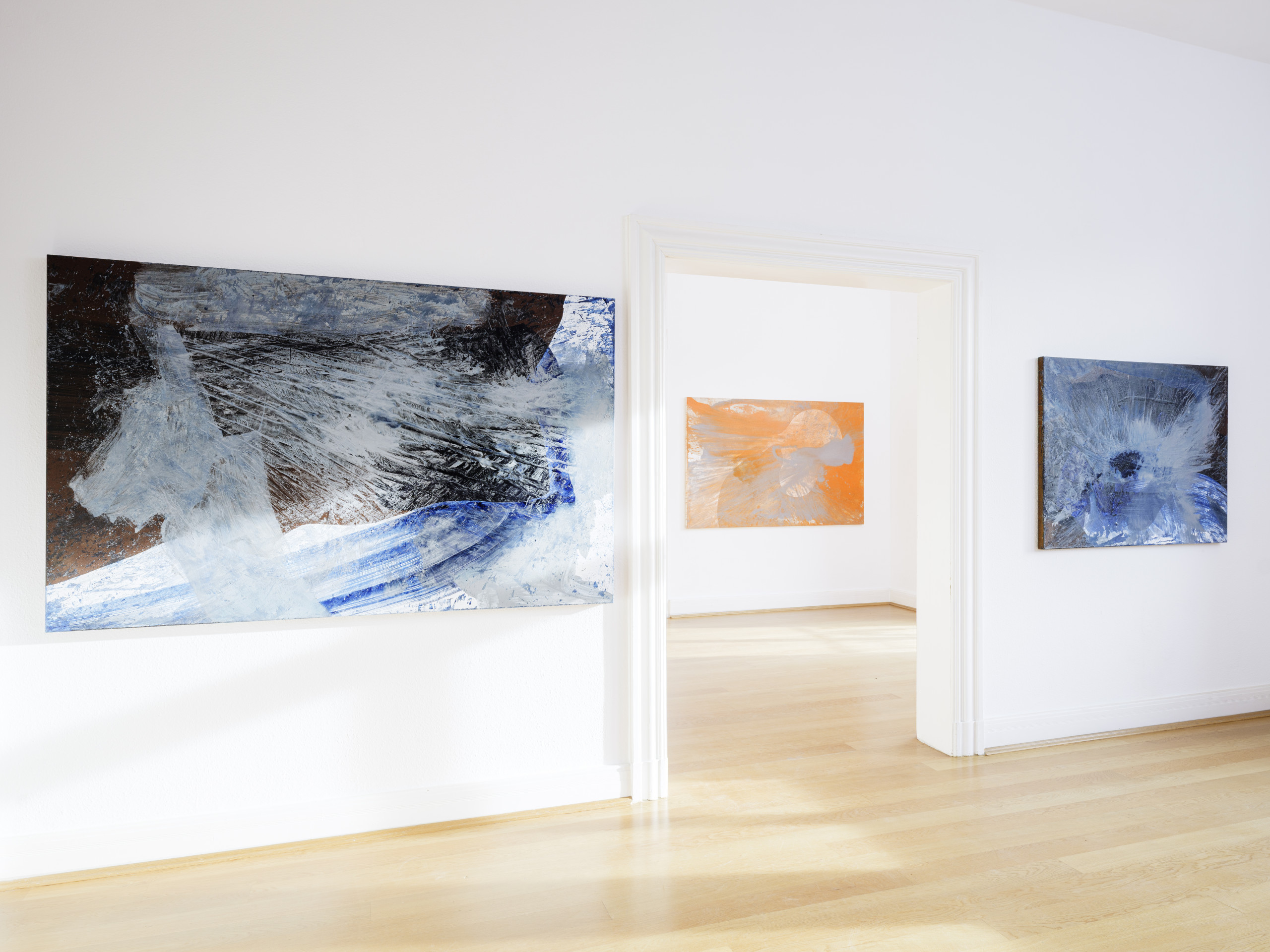
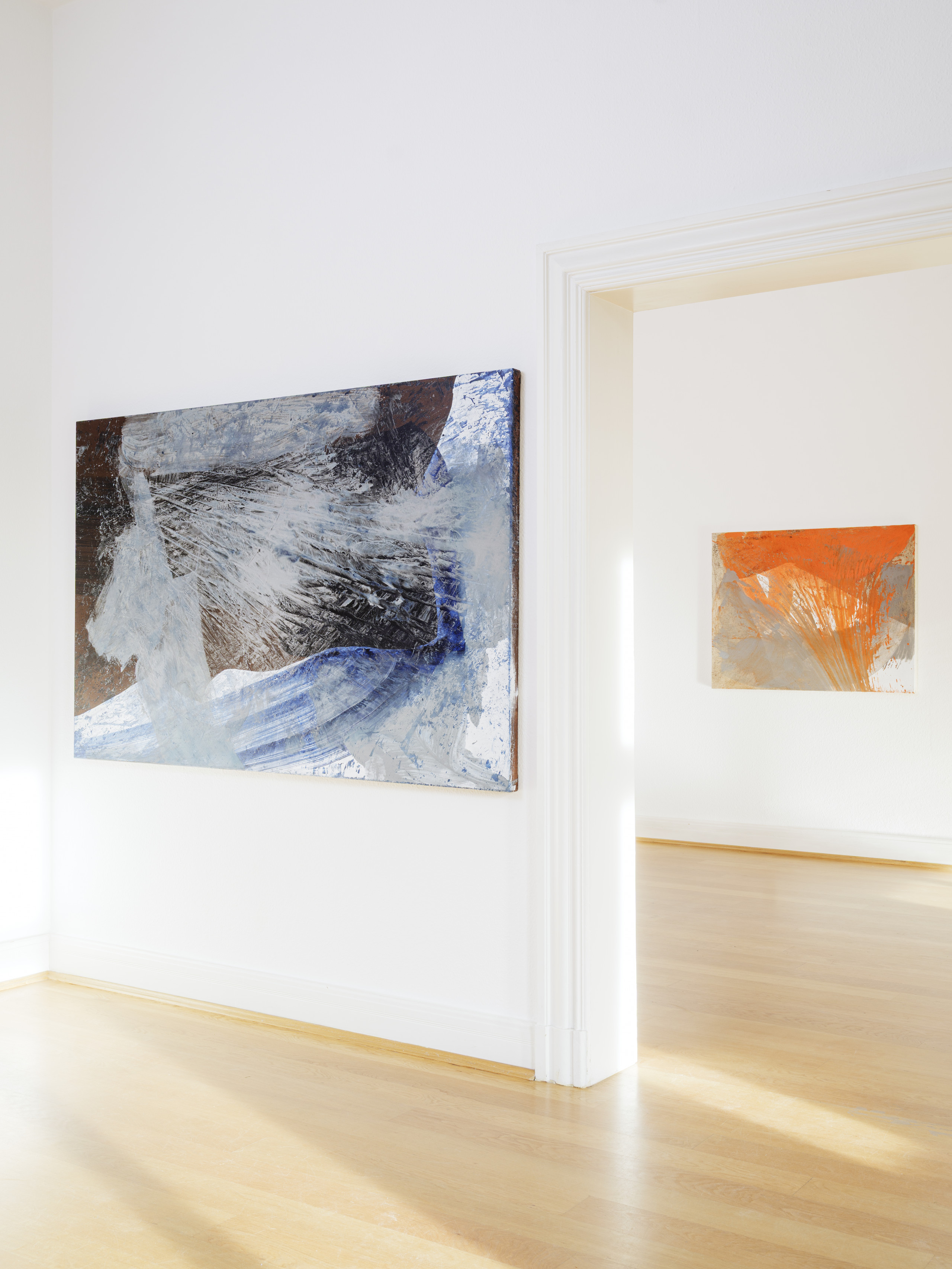
Room 1 pivots into a warm spectrum—yellow and orange sweeping across retroreflective and soil and white grounds, including an orange burst. Broad centrifugal gestures, wiped diagonals and splashed fans articulate a tension between absorptive warmth and cooler reflective fragments. One canvas delivers a centrifugal burst; others suspend afterimages and veils that resolve into nebulous, drifting fields. Warm chroma appears to stabilise the reflective greys, integrating them as tonal anchors rather than isolated phenomena.
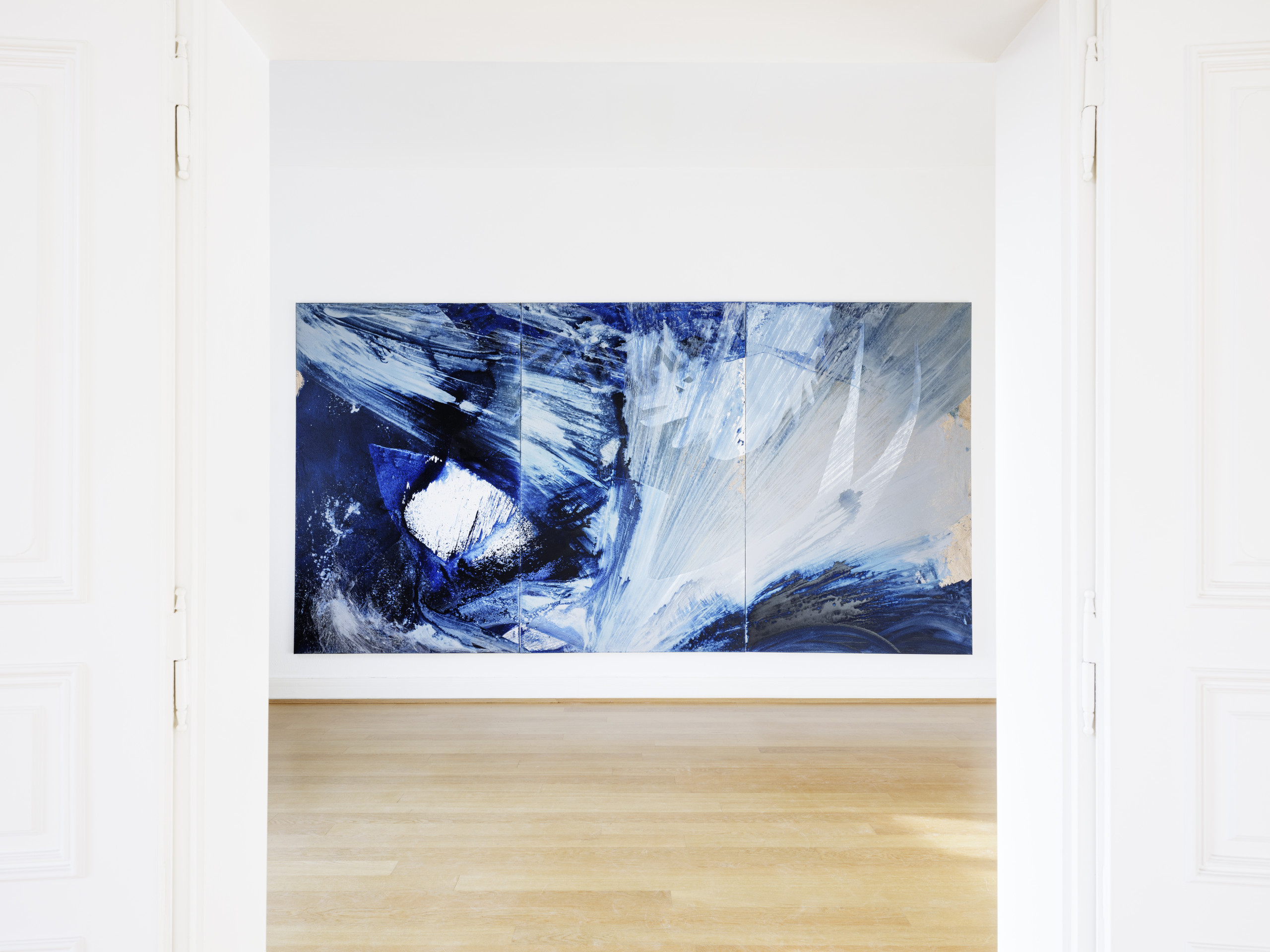
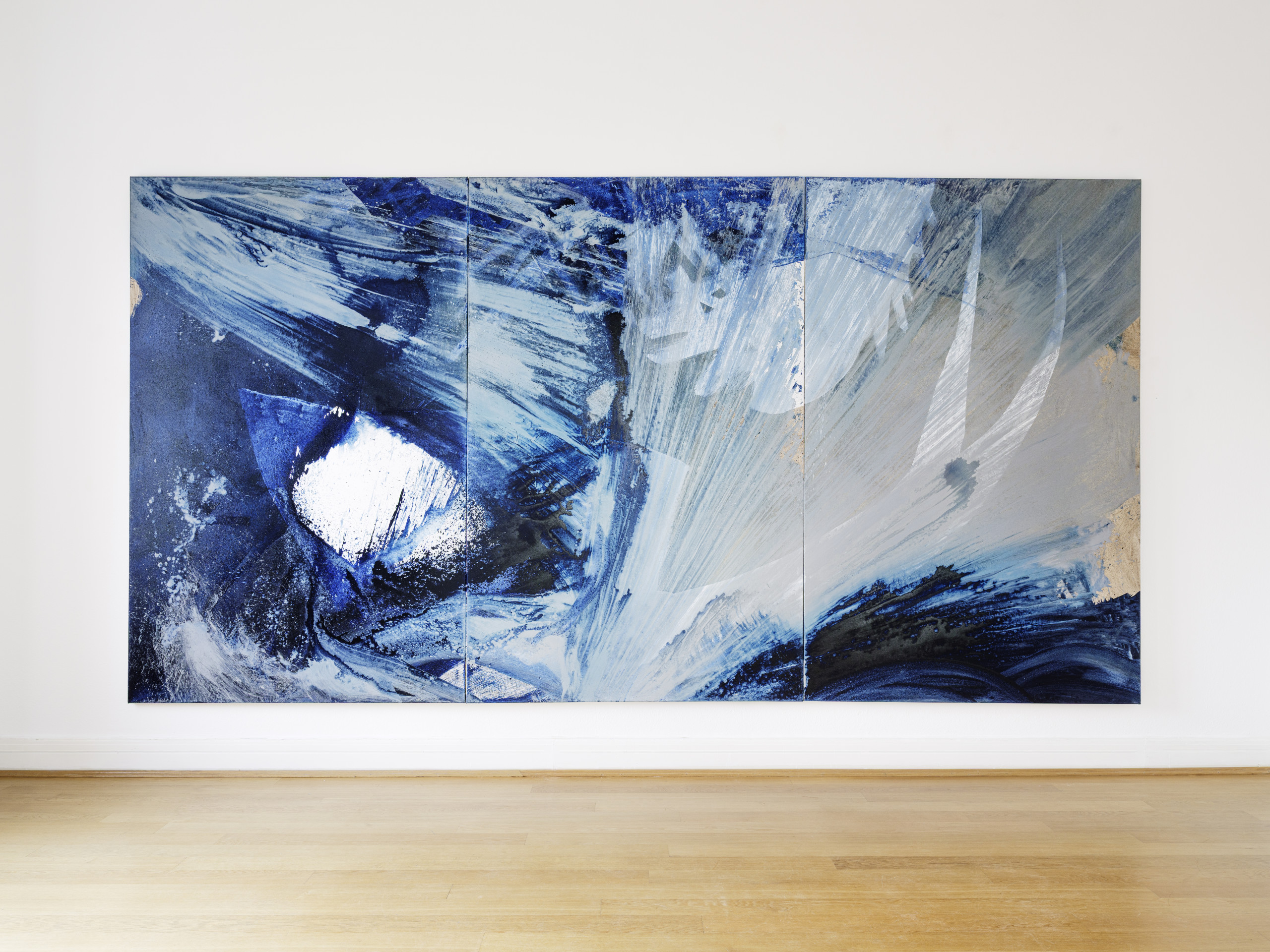
Room 2 dives into deep Prussian blue. The large triptych (250 × 480 cm), centred on the far wall, unfurls lateral waves, translucent wiped passages and denser pools where blue saturates toward nearblack. Prussian blue—historically tied to early synthetic pigment manufacture—here converses with engineered retroreflective particles and an earthen ground: industrial and material histories intersect. Reflective facets interrupt continuity as internal ruptures, puncturing a dark, absorbing field. Natural window light is expected to modulate grey planes over time, adding a slow temporal layer to gestural immediacy.
Within broader arthistorical frameworks, Lergon’s synthesis binds process painting’s indexical sweeps to traditions of lightresponsive surfaces and monochrome/material colour lineages (alizarin, Prussian blue). Retroreflective grey acts less as spectacle than as a mediating value that lets bursts and suspended clouds cohabit a single temporal field.
Rupture, beyond breakage and the disintegration of structure, appears as a productive seam: an encounter structured by movement, incidence of light and delayed recognition, grey first, latent luminosity second. Viewers traverse entrance restraint, warm volatility and blue compression, reading painting as an evolving system of materials and time.
all images © Wolfgang Stahr