Christian Jankowski `Who’s afraid of conceptual art?´
Few artistic practices have shaped the discourse surrounding their own reception as profoundly as Conceptual Art. To this day, it continues to face the accusation of replacing the artwork with the idea. For more than three decades, Christian Jankowski has productively explored this very question. His works do not emerge as self-contained objects but as situations in which craftsmen, art critics, hotel guests, television crews or anonymous internet users become co-authors of the work itself. In Jankowski’s practice, Conceptual Art appears less as the artist’s withdrawal behind an idea than as a conscious expansion of those involved in the production of meaning.
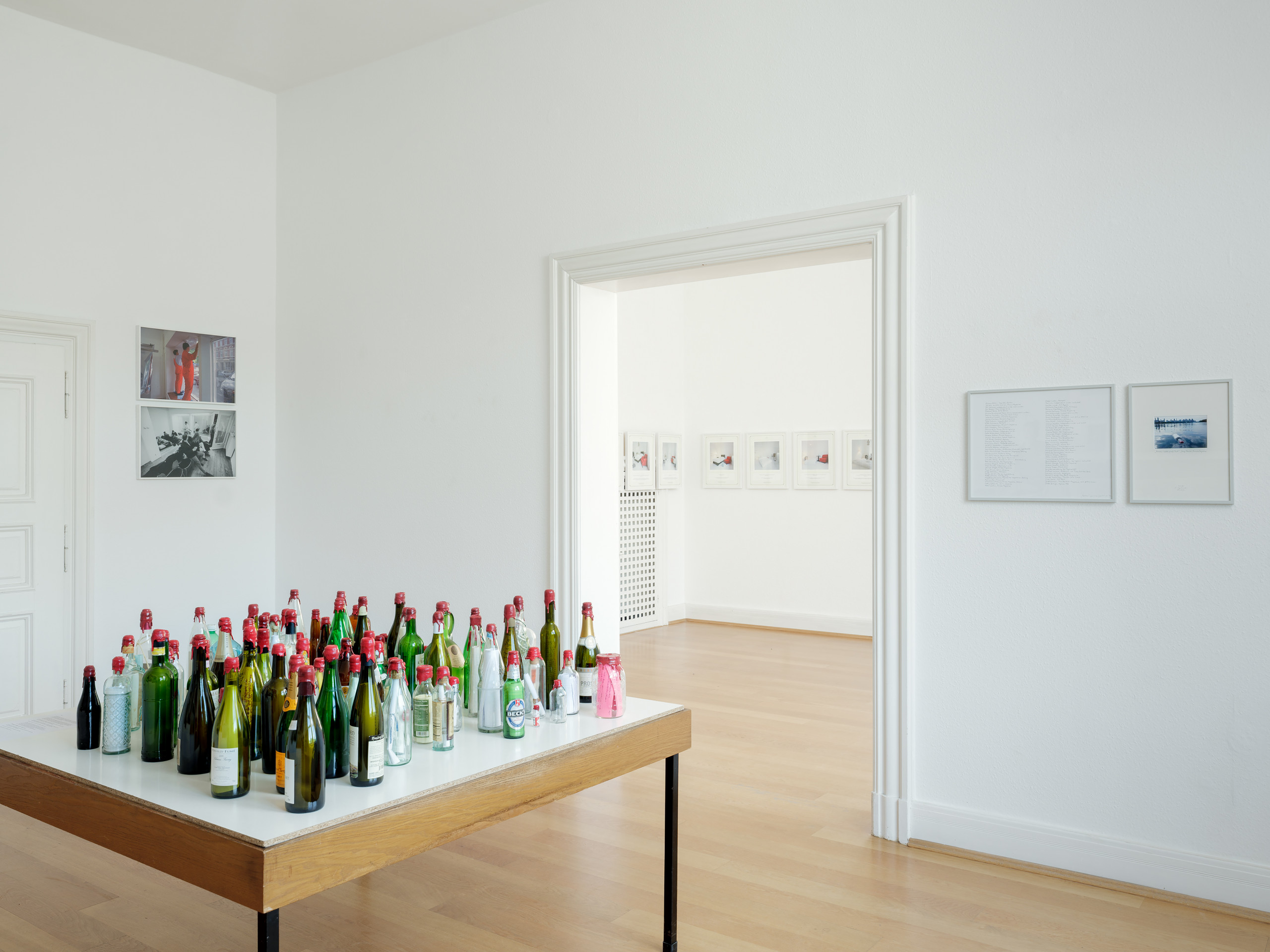
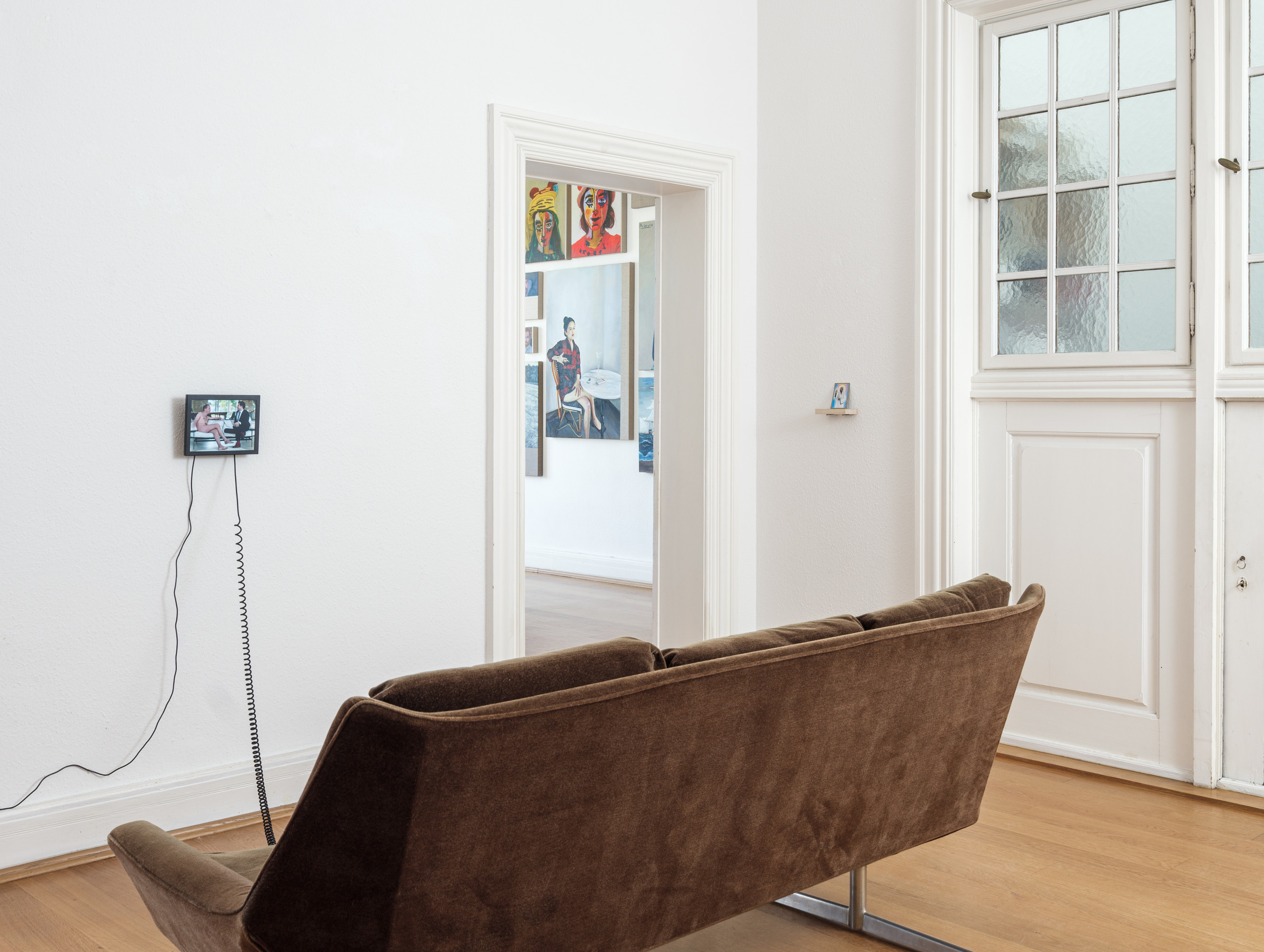
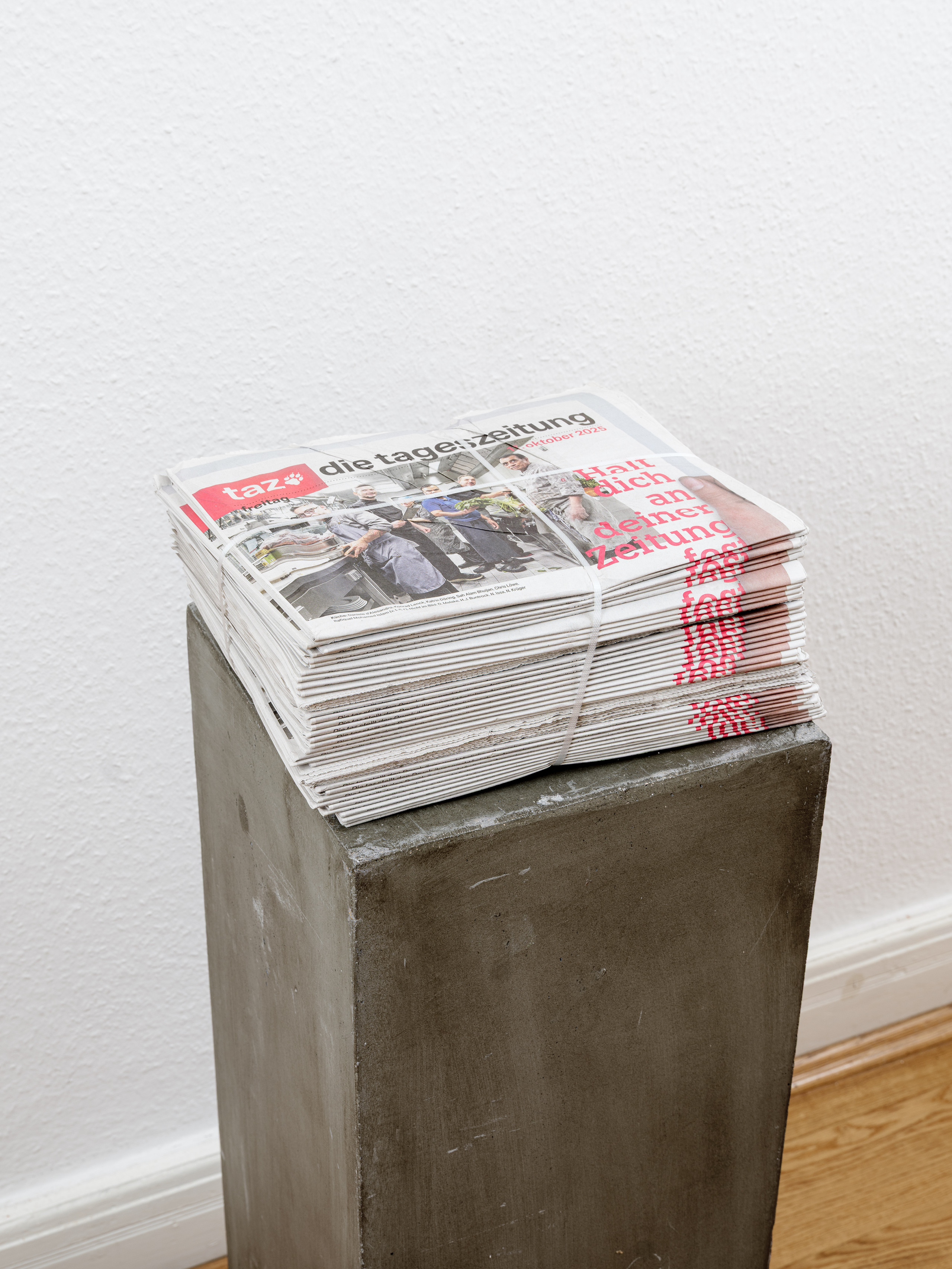
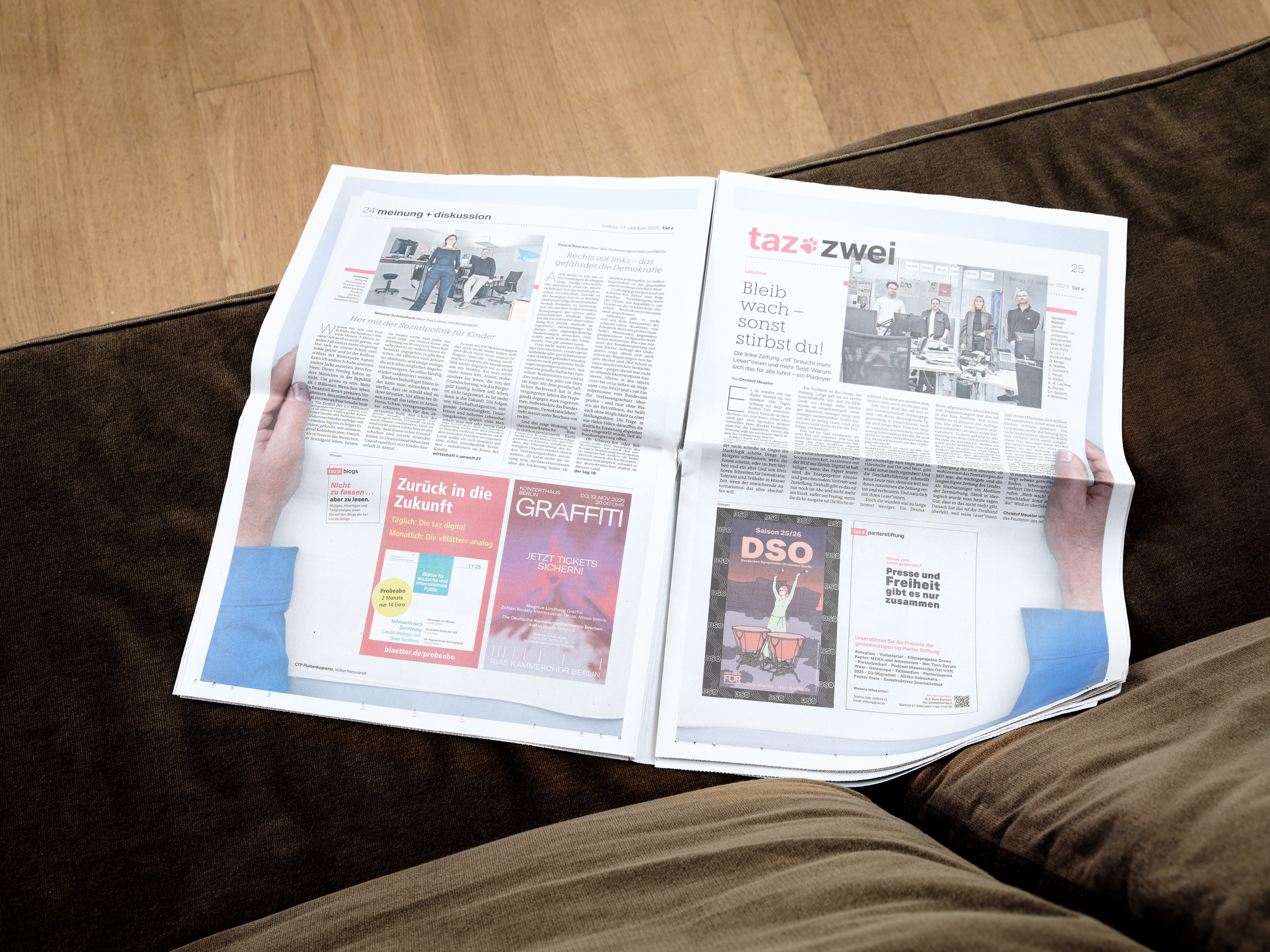
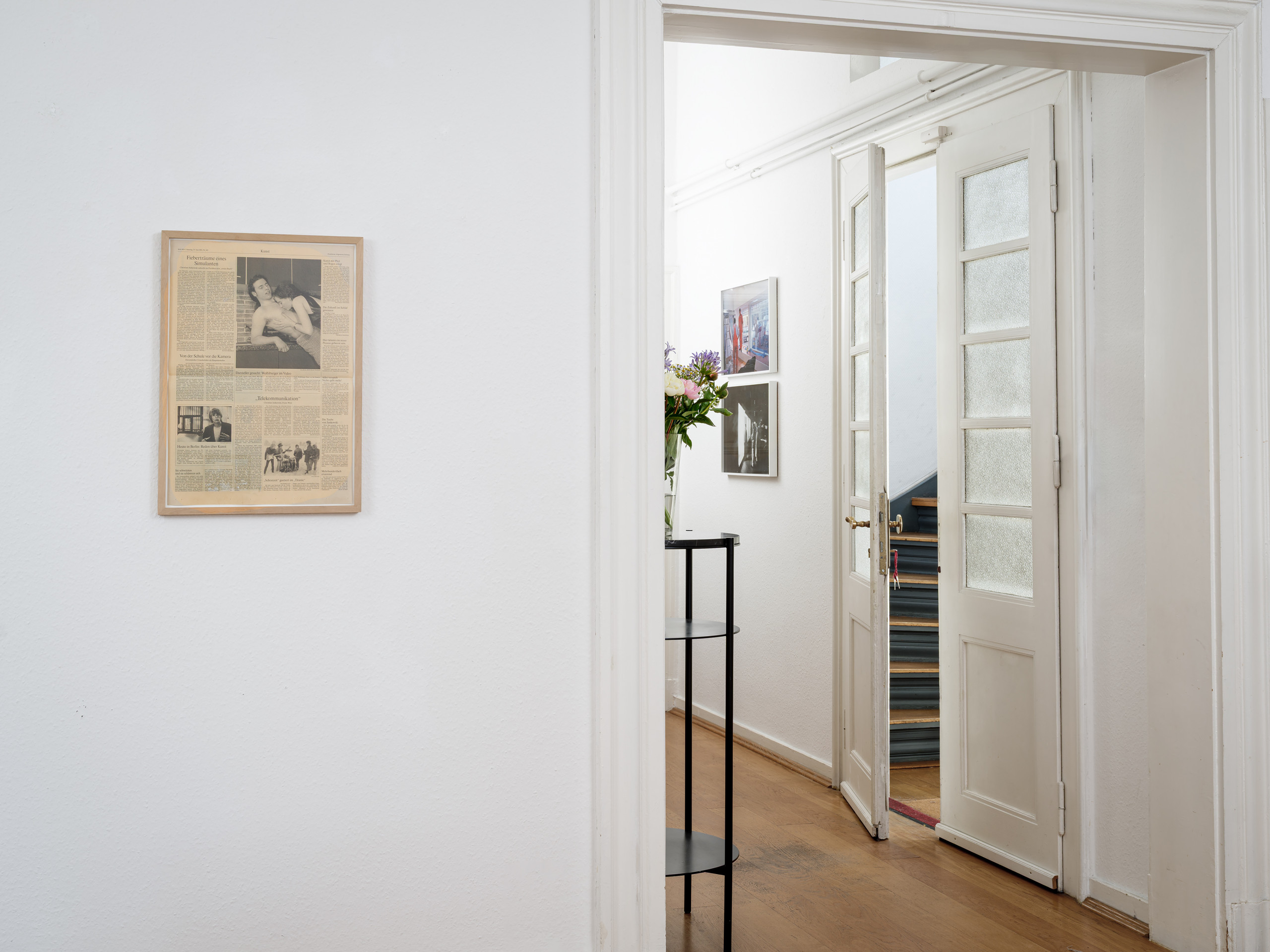
From the outset, the exhibition makes clear that its focus lies less on Conceptual Art as a historical category than on the conditions through which it is mediated. Collected Reviews (Gesammelte Kritik, 2001) condenses reviews published across different newspapers and journals into a single newspaper page, transforming public reception itself into artistic material. The Turning of the Page (Die Seitenwende, 2025), created for the final printed edition of the German newspaper taz, captures the transition from print to digital media through the hands of the newspaper’s employees holding its final pages. Between these two works, the BBC documentary Who’s Afraid of Conceptual Art?, produced in collaboration with Christian Jankowski in 2016 as part of a BBC series on Conceptual Art, lends the exhibition its title. In it, art historian James Fox accompanies the artist through his studio, approaching the questions of authorship, productive irritation and mediation that run throughout the exhibition like a continuous thread.
Within this context, the exhibition venue itself assumes particular significance. Historically, the salon occupied a position between private retreat and public institution. It functioned as a space of hospitality, conversation and intellectual exchange, where art, politics and society met outside established institutional frameworks. Unlike the museum or the gallery, the salon privileges proximity over distance and dialogue over authority. Salon Kennedy consciously embraces this historical understanding: exhibitions are conceived less as self-contained presentations than as points of departure for conversation, encounter and multiple perspectives. It therefore provides not merely the setting for the exhibition, but its conceptual resonance.
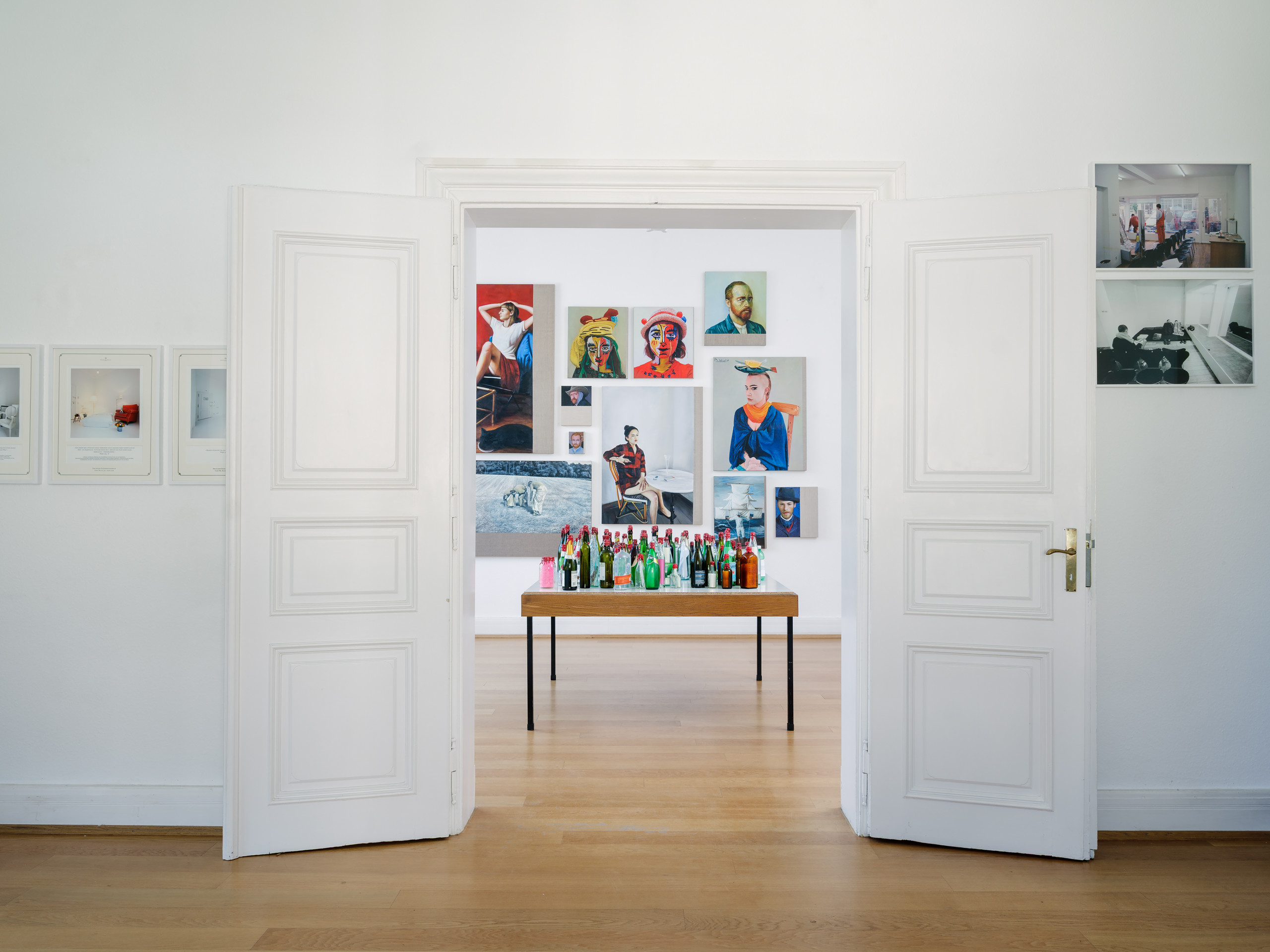
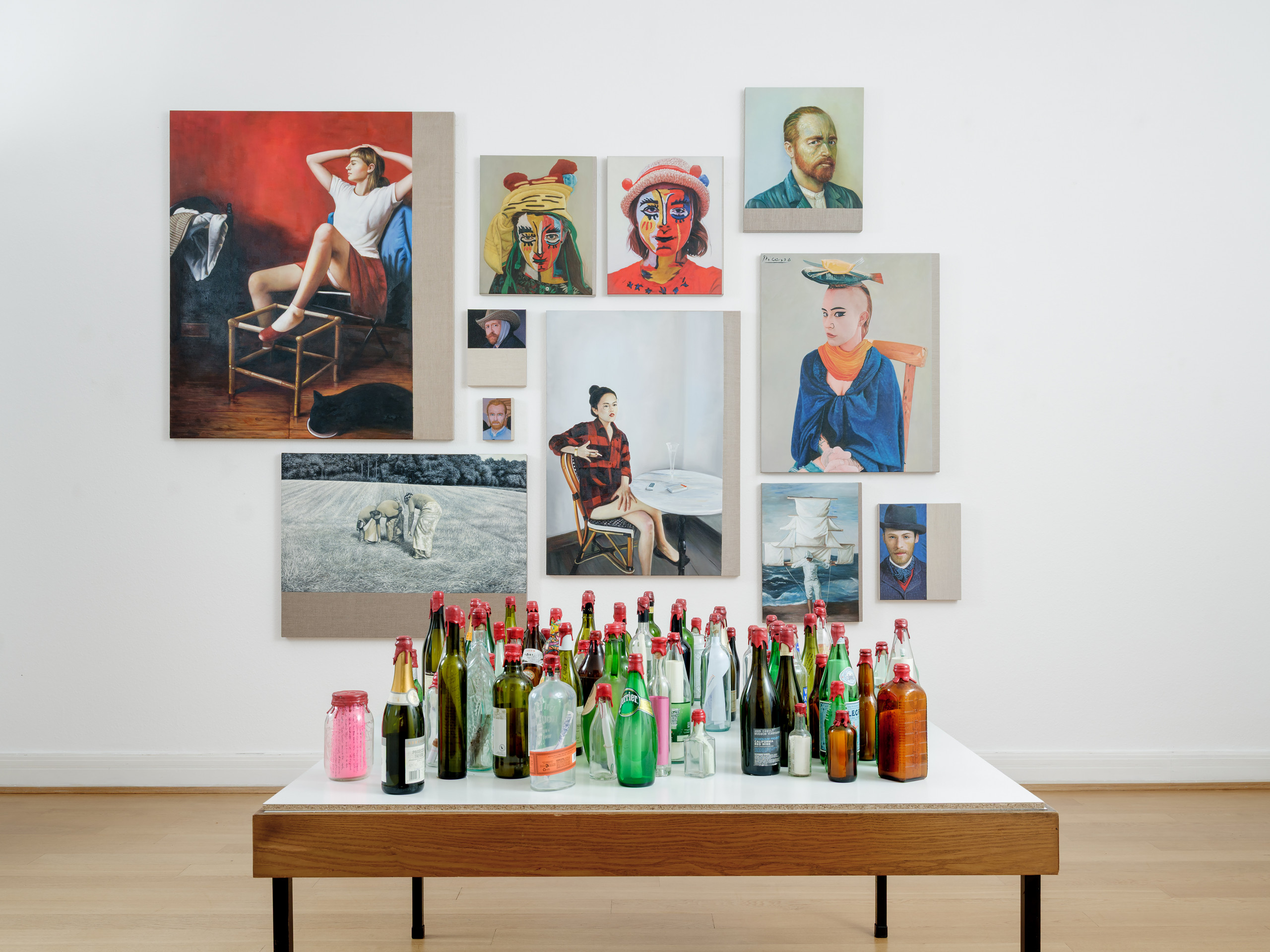
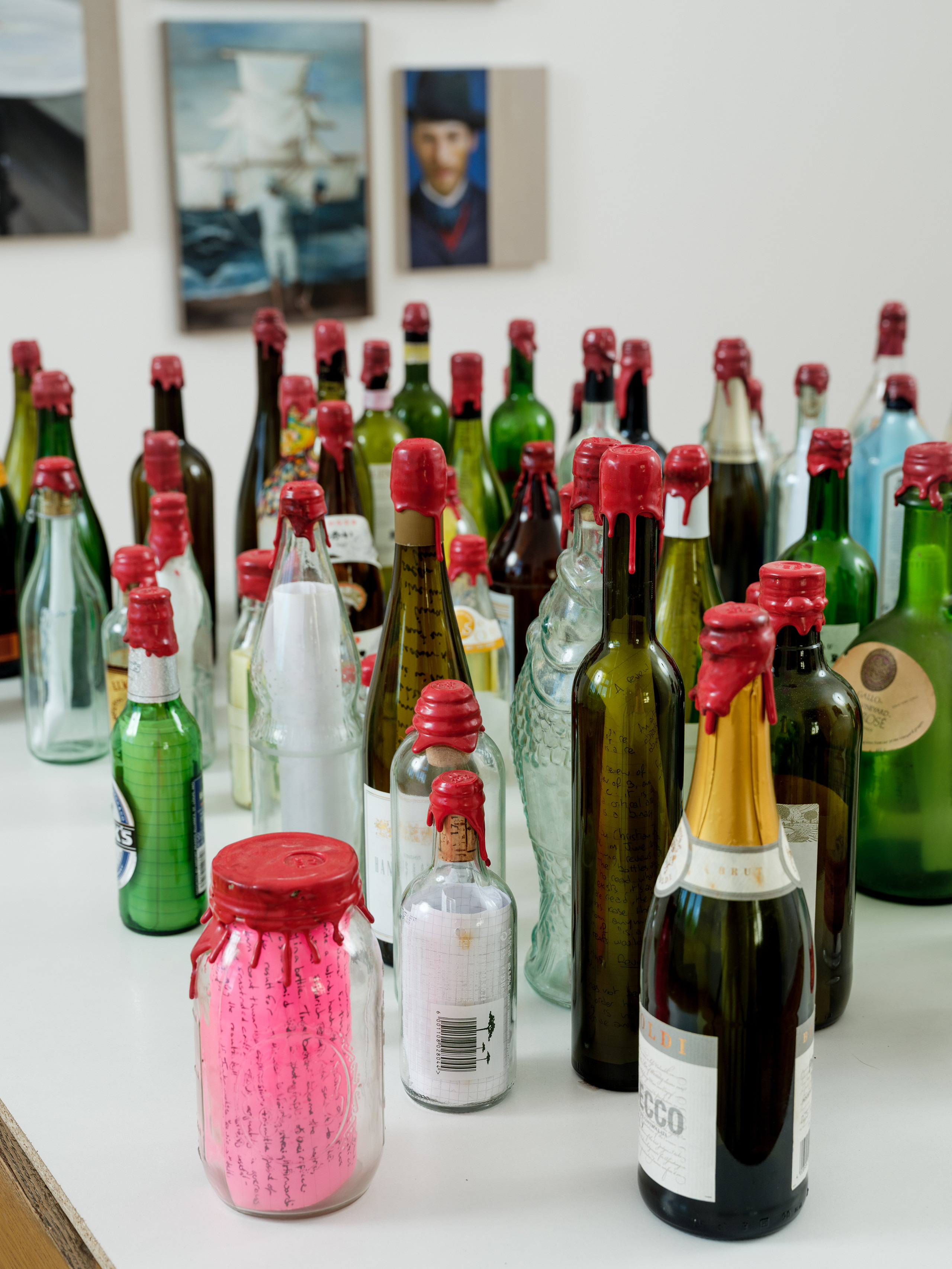
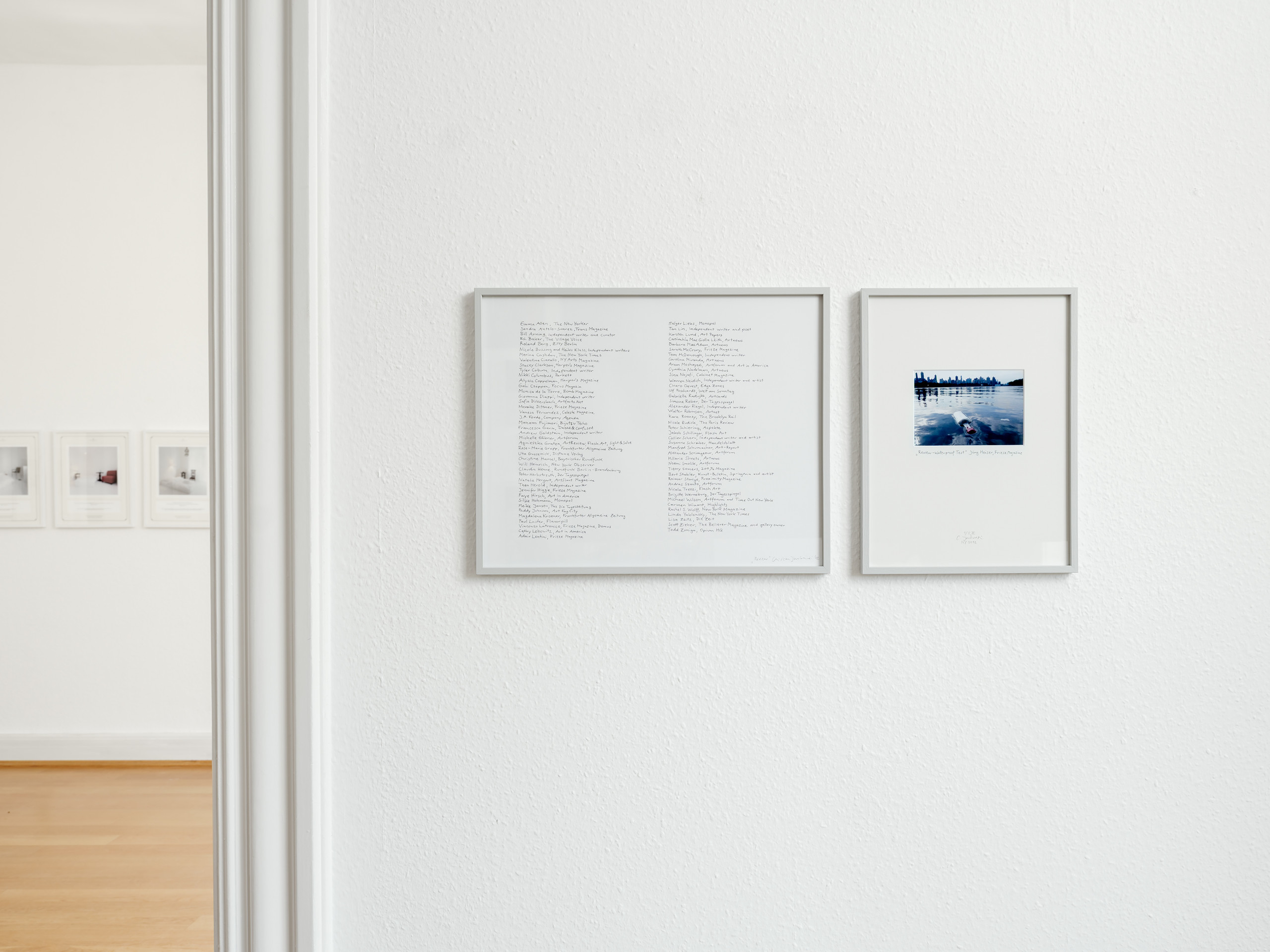
The works assembled here investigate the conditions of artistic authorship from different perspectives. Review – Waterproof Test relocates the act of criticism into the work itself. International art critics were invited to handwrite reviews of an artwork that did not yet exist. Their texts were sealed inside bottles of their own choosing, briefly subjected to a waterproof test in the Hudson River, and subsequently retrieved. At Salon Kennedy, the bottles themselves are presented alongside the artist’s handwritten list of participating critics, the original invitation letter and the documentation of the test. Criticism no longer functions as commentary on the artwork; it becomes one of its materials.
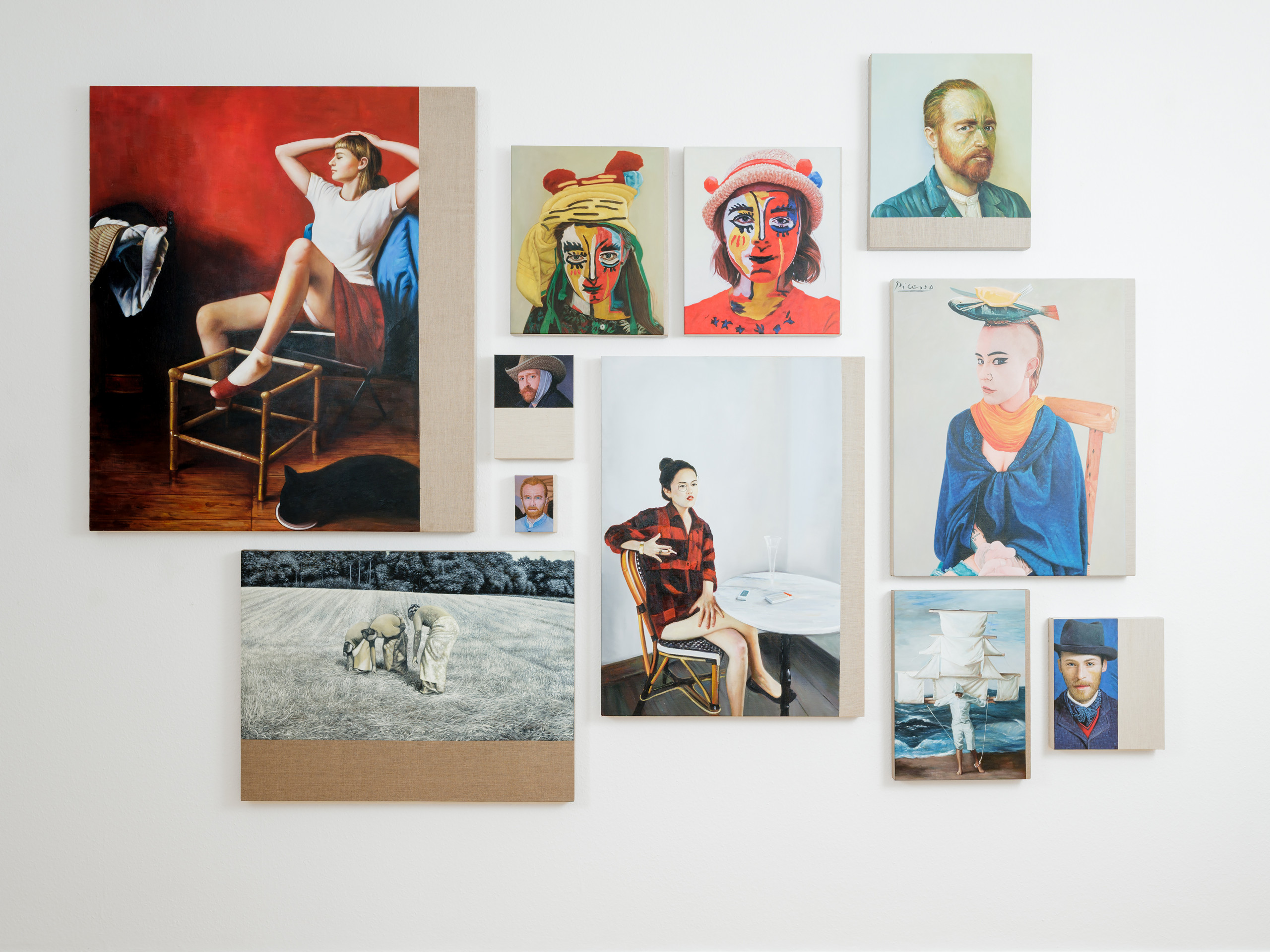
New Painting (Neue Malerei) likewise investigates shared authorship. The series begins with photographs of anonymous individuals reenacting masterpieces of art history as tableaux vivants and publishing them online. Jankowski removes these images from their digital context and commissions specialist copy painters in China to recreate them in the scale and painterly language of the original works. Between historical image, digital reproduction and painterly appropriation emerges a chain of collective image production, whose successive translations remain visible in the untreated edges of the canvases.
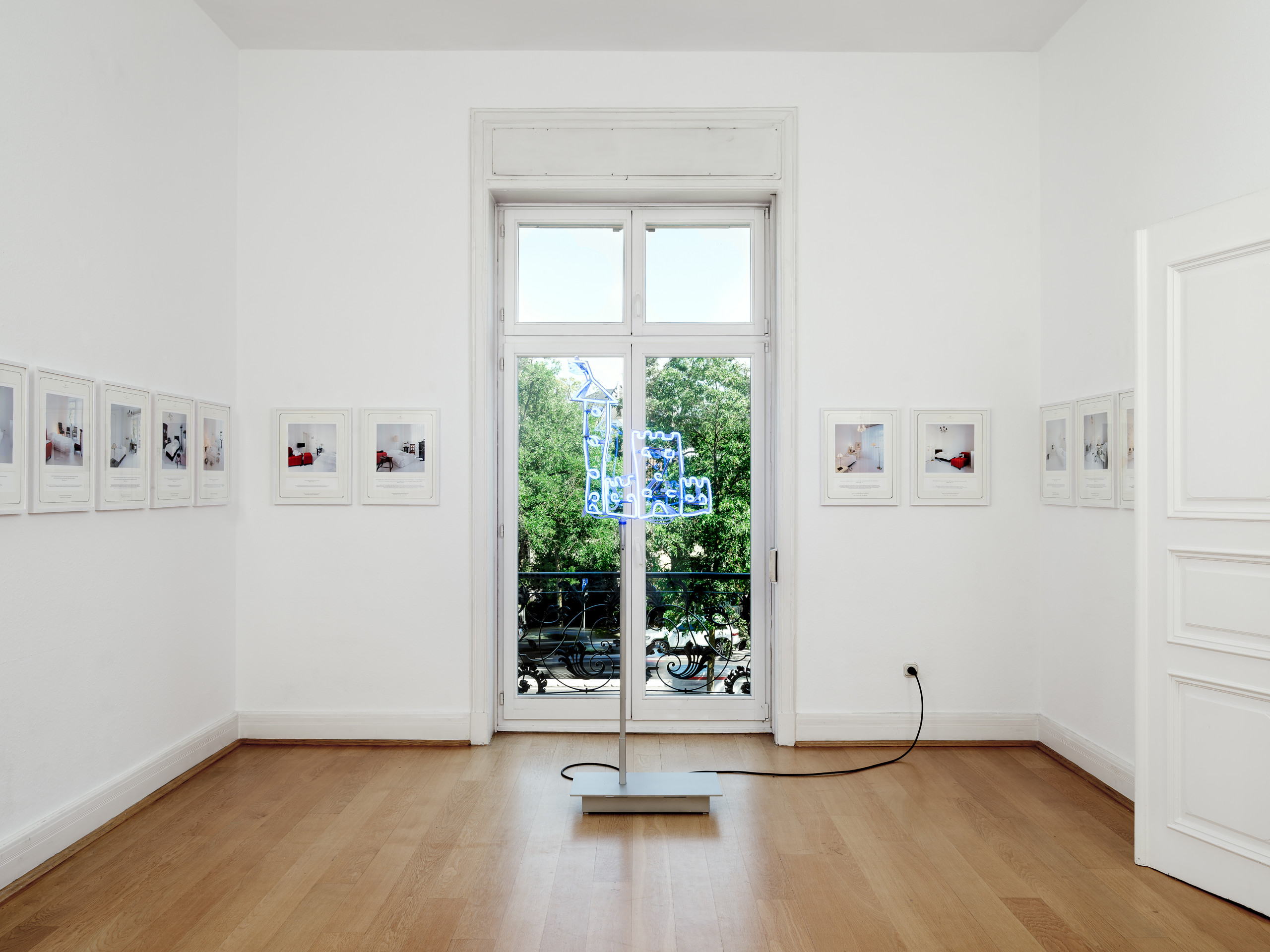
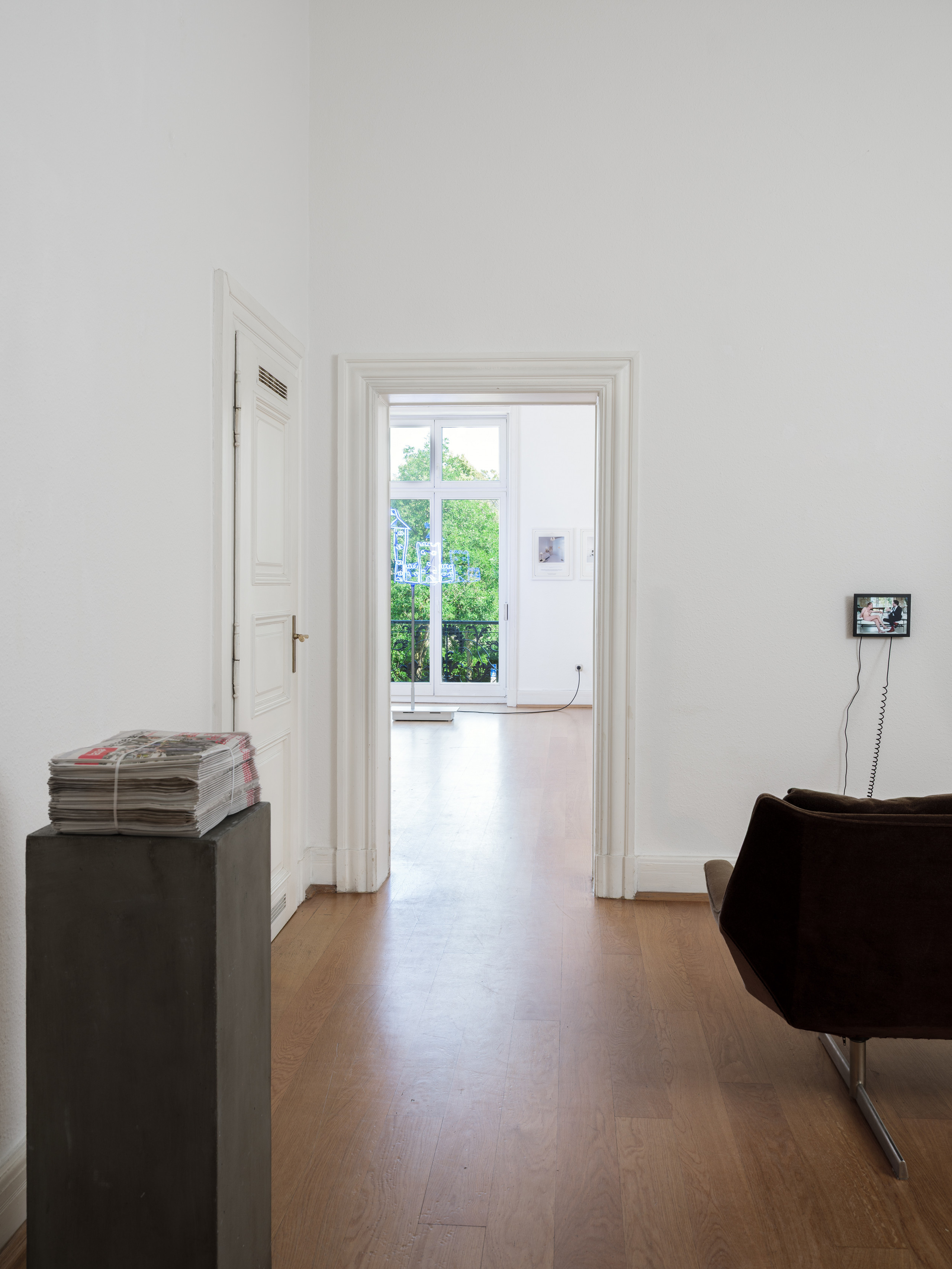
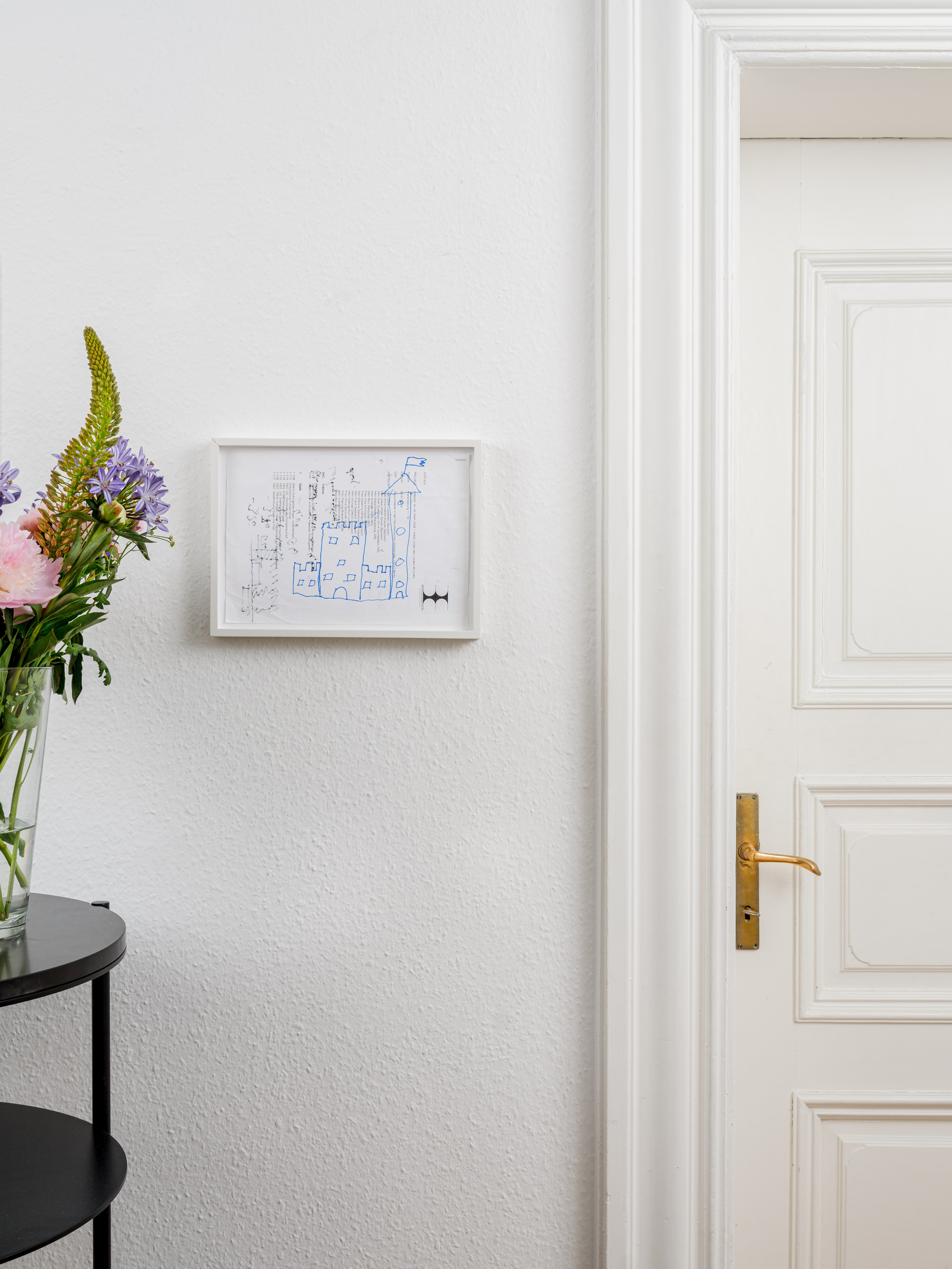
With Castle in the Air (Luftschloss), Jankowski transfers this principle of shared imagination into the realm of architecture. During the construction of David Chipperfield’s Château Royal in Berlin, he invited workers from different trades to draw the castle of their dreams directly onto their construction plans. From the drawing of a drywall installer he developed the neon sculpture presented in the exhibition. Construction drawing and imagined architecture overlap to form a double projection, revealing forms of creative authorship that normally remain invisible within the process of building.
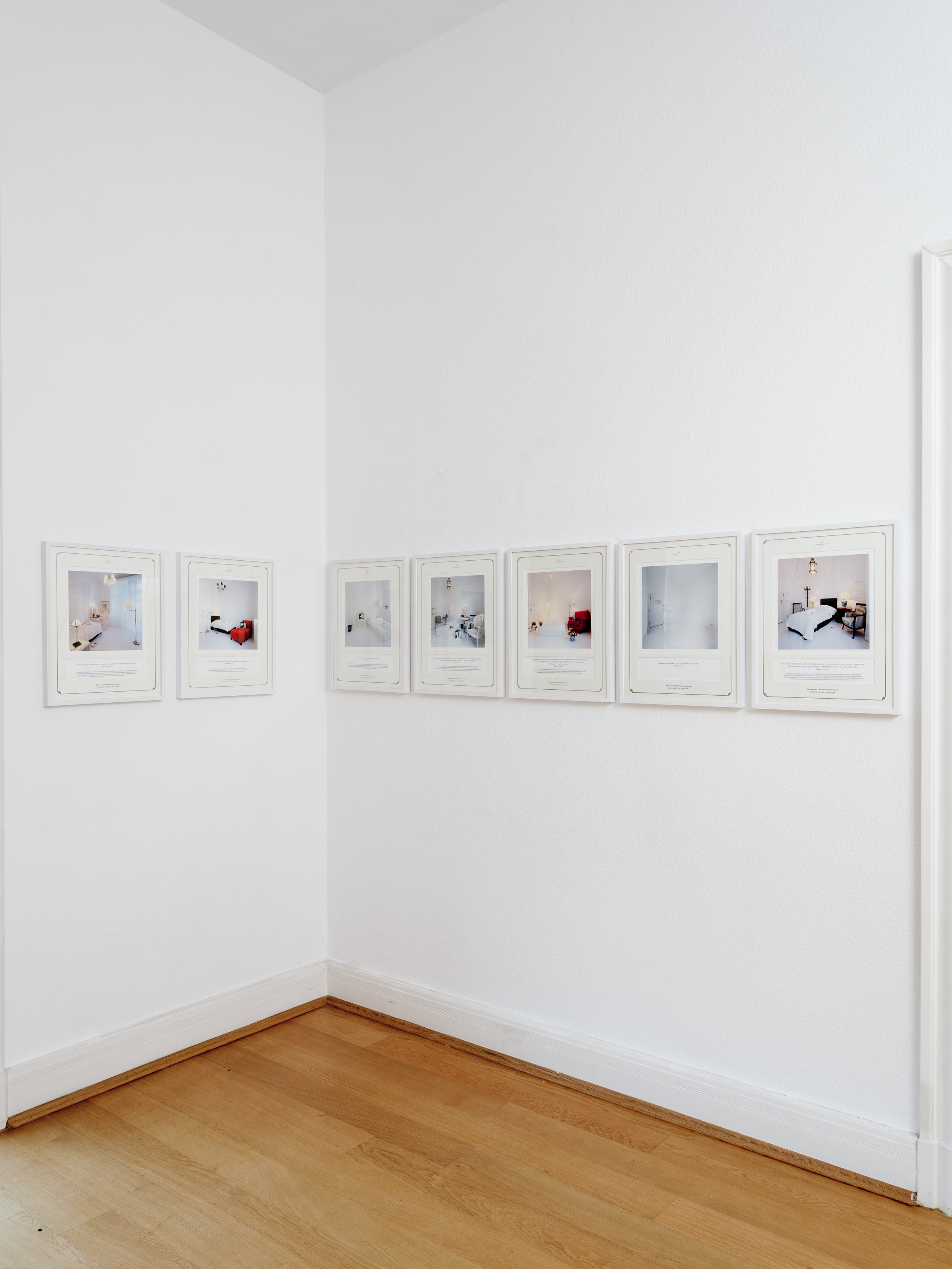
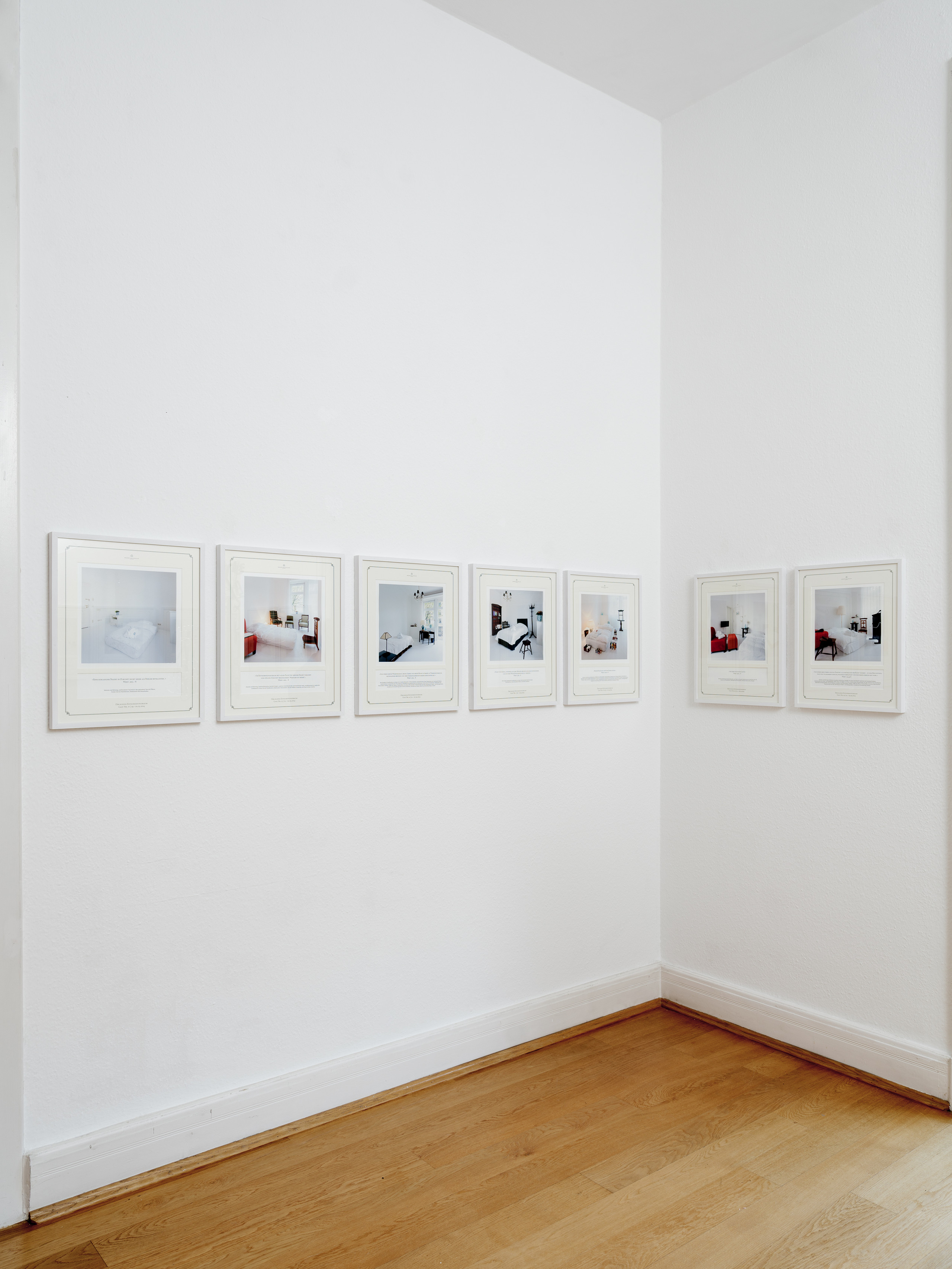
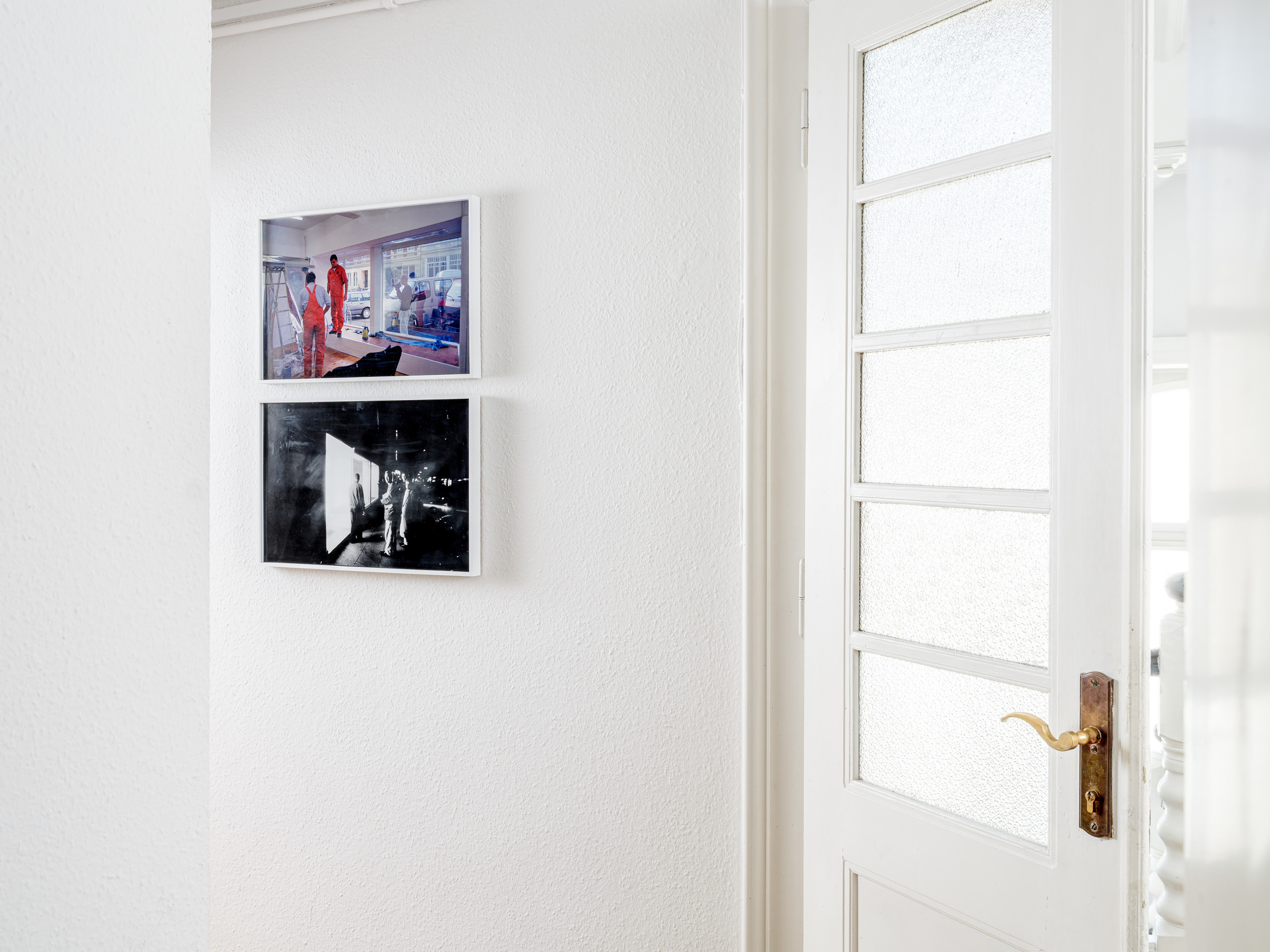
The Little Decision Room and The Secure Space ultimately place the visitor at the centre of the work. At Brenners Park-Hotel in Baden-Baden, guests furnished an entirely empty hotel room by selecting objects from the hotel’s inventory, reflected upon their decisions after spending the night, and finally determined the monetary value of their own experience. Already in 1994, Jankowski transformed his studio apartment into a publicly accessible place of refuge for twenty-four hours. Its windows were mirrored and made bullet-resistant, a professional security system was installed, and all potentially dangerous objects removed before passers-by were invited to enter, stay or even spend the night. Both works investigate privacy not as withdrawal, but as a social condition produced through participation, trust and encounter.
Perhaps this also suggests an answer to the question posed by the exhibition’s title. Those who fear Conceptual Art may fear less the idea itself than the loss of familiar certainties surrounding authorship, originality and meaning. Jankowski’s works do not dissolve these certainties. Rather, they create situations in which they are continually renegotiated. Conceptual Art emerges here not as a departure from the artwork, but as a practice of encounter — an art that comes into being where people act, judge, decide and ultimately produce reality together.
all images © Wolfgang Stahr